Garages & Outbuildings

Everything Needs a 
Proper Home

The cars that spend Utah winters in the driveway. The tools are crammed into a storage unit you pay monthly for. The hobby that shares space with the water heater. The RV depreciates faster outside than the loan pays down. A properly built garage or outbuilding solves all of it simultaneously — and adds permanent, appraised value to your property. RainFire Builders designs and builds every type of garage and outbuilding, permitted and engineered, from single-car attached garages to industrial-grade workshop buildings.

DESIGN MY GARAGE OR BUILDING

EXPLORE OUR SERVICES

OUR GARAGE & OUTBUILDINGS SERVICES
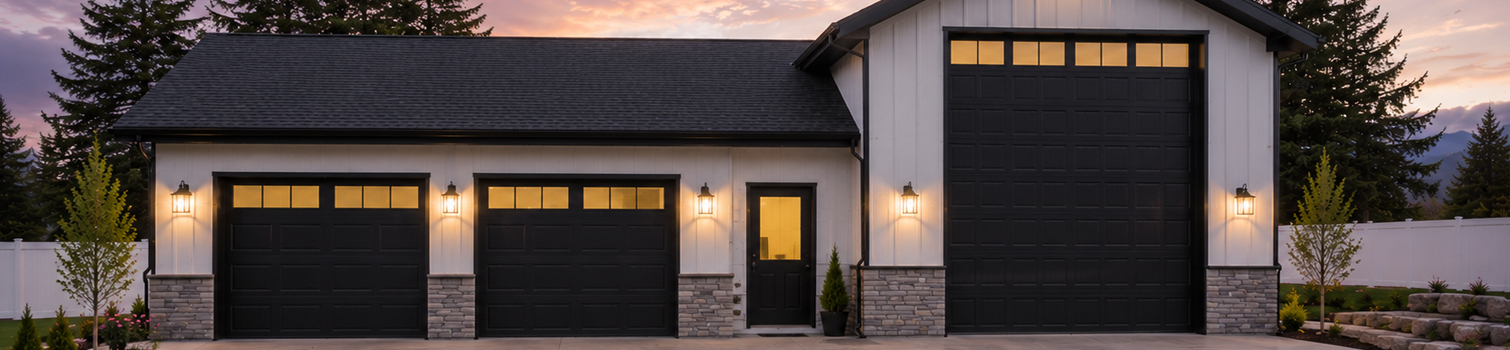
  • Attached Garages

  • Detached Garages

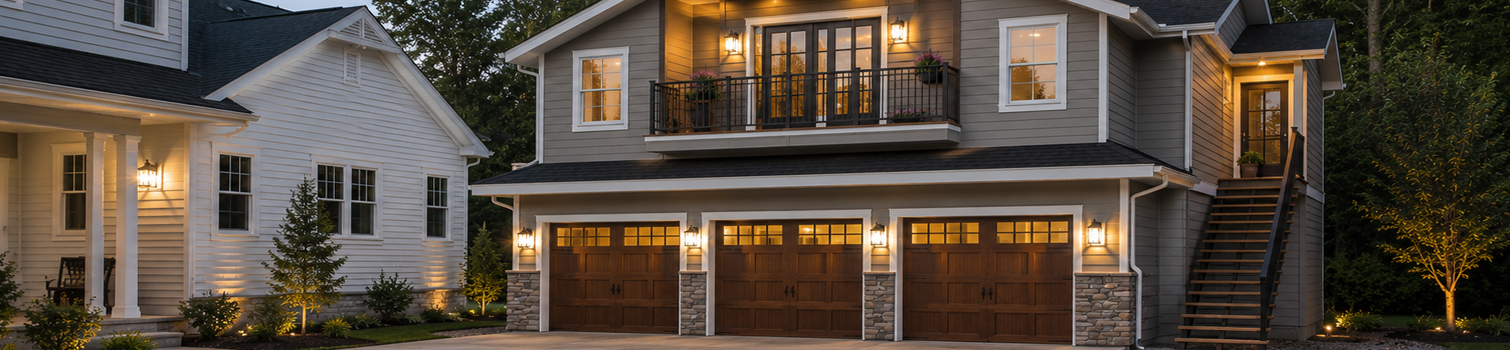
  • Oversized & 3-Car Garages

  • RV & Toy Hauler Garages

  • Workshop Buildings

  • ADU-Ready Garages

  • Carriage Houses

  • She-Sheds & Hobby Studios

  • Barn-Style Storage Buildings

  • Commercial Outbuildings

100%

Licensed & Insured

7+

Counties Served

15+

Years in Utah

500+

Projects Delivered

BUILD IT RIGHT THE FIRST TIME

The Add-Ons That Cost
Almost Nothing Now
And Everything Later

Most garage regrets come from the same source: someone built exactly what they needed that day and nothing more. The electrical wasn’t sized for the tools they’d eventually own. The insulation wasn’t installed because it seemed optional. The plumbing wasn’t roughed in because the ADU felt hypothetical. Three years later, every one of those decisions costs real money to undo.

The marginal cost of future-proofing a garage during construction is small. A 200-amp sub-panel instead of a 100-amp costs $800–$1,500 more. Plumbing rough-in for a future bathroom or ADU costs $3,000–$6,000. Insulating the walls and ceiling while the framing is open costs $2,000–$4,000. EV charger conduit and circuit cost $400–$800. These same upgrades, retrofitted after the walls are closed, cost 3–5 times more — and some require tearing out finish work entirely.

RainFire Builders walks through every future-proofing option with every garage client before design is finalized. We build the garage you need today, pre-equipped for everything you might want tomorrow.

FUTURE-PROOF UPGRADES – ADD DURING BUILD, NOT AFTER

OUR GARAGE & OUTBUILDINGS SERVICES

TEN BUILDINGS –
ONE STANDARD OF EXCELLENCE

Every garage and outbuilding RainFire Builders delivers is permitted, structurally engineered, and built to the standard that protects your vehicles, your tools, your hobbies, and your investment for decades — not just until the first hard Utah winter tests the construction shortcuts your previous contractor thought nobody would notice.
Recruitment Executive Search

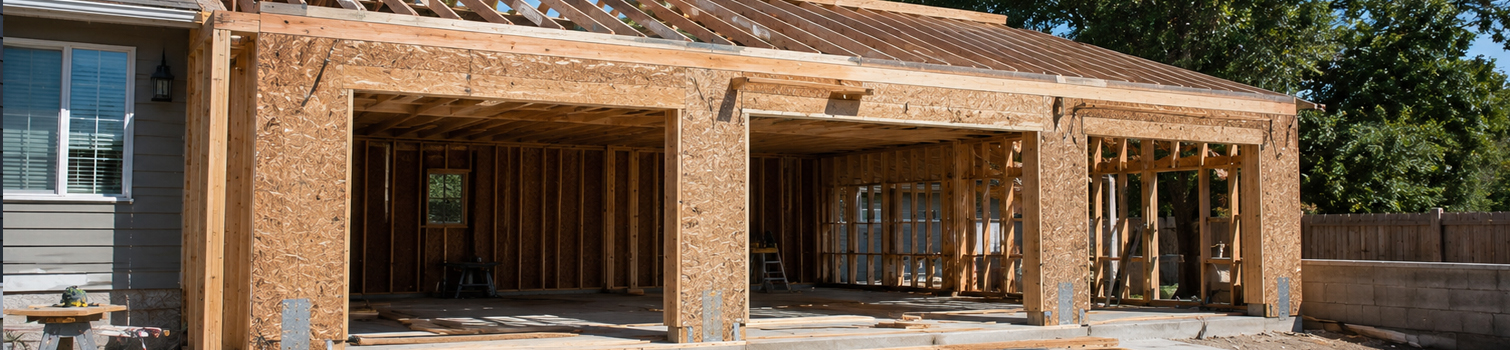
An attached garage is one of the most functional and financially impactful additions available to a Utah homeowner — convenient access from inside the home, direct contribution to the main structure’s footprint, and a daily quality-of-life upgrade for every person who has ever loaded groceries in January or scraped ice off a windshield at 7 a.m. RainFire Builders builds attached garages as fully integrated additions: structurally connected to the main dwelling, architecturally matched in exterior finish, and built to the fire-separation requirements that protect the living space from what happens in the garage.

  • 1-hour fire-rated wall and ceiling assembly between garage and living space
  • Self-closing, solid-core or steel door from garage to home interior
  • Structural integration with existing foundation and framing
  • Exterior finish match — siding, roofline, windows, and trim
  • Full electrical — panel, lighting, outlets, and EV circuit
  • Insulation and drywall finish for conditioned comfort

What fire separation is required between an attached garage and the house in Utah?”

The IRC (International Residential Code) requires a minimum 1/2-inch drywall separation on the garage side of the wall between an attached garage and the living space. If there is living space above the garage, a 5/8-inch Type X drywall ceiling assembly is required on the garage side. The door between the garage and living space must be a solid wood or solid steel door (minimum 1-3/8 inch thick) and must be self-closing and self-latching. RainFire Builders installs all fire-separation assemblies to current Utah-adopted IRC requirements on every attached garage project — this is code compliance, not an upgrade option.

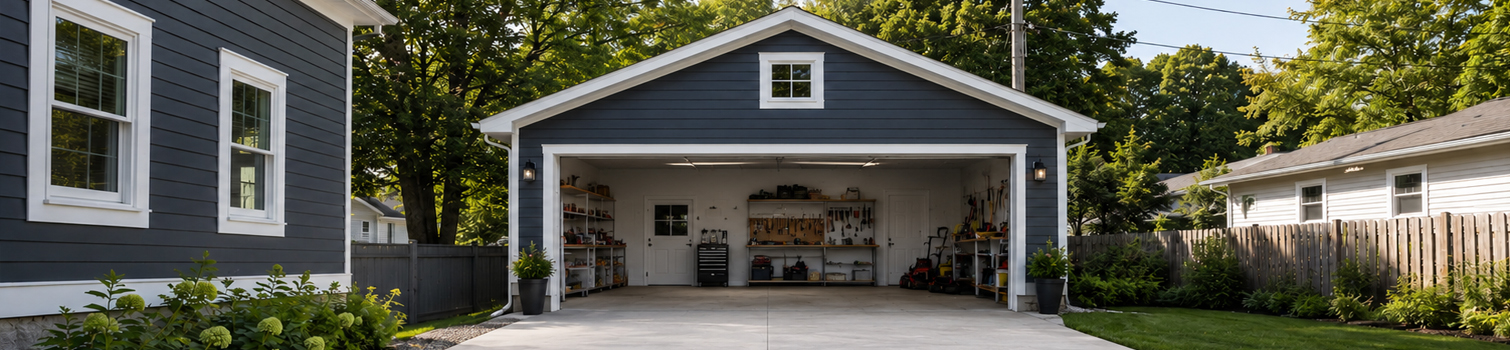
A detached garage is a freestanding structure that can serve multiple purposes simultaneously without the compromises of an attached design — workshop in one bay, vehicle storage in another, without the noise, fumes, or chemical smells transferring into the living space. Detached garages sit on their own foundation, connect to their own sub-panel, and can be positioned to take advantage of lot setbacks, views, and access patterns that an attached garage can’t. For lots where the home’s primary entrance and the best vehicle access point are on different sides, a detached garage often makes far more practical and aesthetic sense.

  • Independent foundation — monolithic slab or perimeter with interior slab
  • Independent electrical sub-panel — sized for intended use
  • Architectural style coordination with the main home
  • Overhead door options — steel, carriage-style, insulated
  • Man door and window placement per use and security considerations
  • Covered walkway connection to the main home is available

How close to the property line can I build a detached garage in Utah?”

In most Wasatch Front residential zones, the minimum side yard setback for a detached garage is 3–5 feet from the property line. Rear setbacks run 5–15 feet depending on the municipality. Front yard setbacks are typically 20–25 feet from the front property line. If a garage is within 5 feet of a property line, fire-rated wall construction may be required. Some municipalities have different standards for accessory structures than for the main dwelling. RainFire Builders researches your specific parcel’s setback allowances before any design work begins — so you know what your lot allows before committing to a layout that can’t be permitted.

Recruitment Executive Search

tah families accumulate gear at an extraordinary rate — ski equipment, mountain bikes, snowboards, camping supplies, boating gear, and all of the tools it takes to maintain a Wasatch Front home through four demanding seasons. A 2-car garage stops being a 2-car garage the first time serious outdoor equipment moves in. A 3-car or oversized garage gives every vehicle its bay and every category of gear its dedicated storage zone — without the monthly storage unit bill and without the Sunday afternoon treasure hunt through everything piled between the cars. RainFire Builders builds oversized garages to the maximum dimension that your lot coverage limits allow.

  • 3-car side-by-side and tandem bay configurations
  • Deep bays (30–36 ft) for trucks, SUVs, and boat trailers
  • Built-in storage systems, overhead storage structure
  • Utility sink, floor drains, and water connection
  • 200-amp sub-panel with 240V circuits for equipment
  • Heated garage option — forced air or in-slab radiant

What is the maximum garage size I can build in Utah?”

Maximum garage and accessory structure size in Utah is typically governed by the municipality’s lot coverage limit — the maximum percentage of the lot that all structures combined can occupy. In most Wasatch Front residential zones, total lot coverage is capped at 40–55% of the lot area. Some municipalities also impose absolute size caps on accessory structures (commonly 1,000–1,200 sq ft for detached garages). RainFire Builders calculates available lot coverage for your specific parcel and designs to the maximum permitted square footage — so you get the most space your lot allows within what can be approved.

An RV sitting on a Utah driveway or in a monthly storage lot is depreciating in every direction simultaneously — UV damage to the roof and exterior materials, battery drain from temperature extremes, and the kind of freeze-thaw damage to water systems that a single forgotten winterization step causes. The math on RV garage construction is typically straightforward: the garage depreciates less than the RV saves in storage fees and protected condition over five to ten years. RainFire Builders builds RV garages to the specific clearance dimensions of your vehicle — not to a generic “RV size” that may not actually fit your Class A when the mirrors are extended.

  • 14-foot minimum clear door height — taller for Class A motorhomes
  • 45–55-foot interior depth per vehicle plus storage
  • 30/50-amp shore power hookup inside the building
  • Water fill station and waste dump connection
  • Overhead clearance calculation from your actual vehicle dimensions
  • Additional bays for towed vehicle or powersport storage

How tall does an RV garage door need to be in Utah?”

Minimum clear door height for a standard Class A motorhome is 14 feet. High-profile Class A coaches and some Class C motorhomes with raised roofs or satellite dishes may require 14.5 or 15 feet of clear opening height. Fifth-wheel combinations vary by the trailer’s pin box height. RainFire Builders measures your specific vehicle — including any roof-mounted accessories extended — and adds a minimum 6-inch clearance margin to that measurement before specifying the door opening and structural header height. Never trust a “standard RV door” specification without verifying your actual vehicle’s dimensions.

Recruitment Executive Search

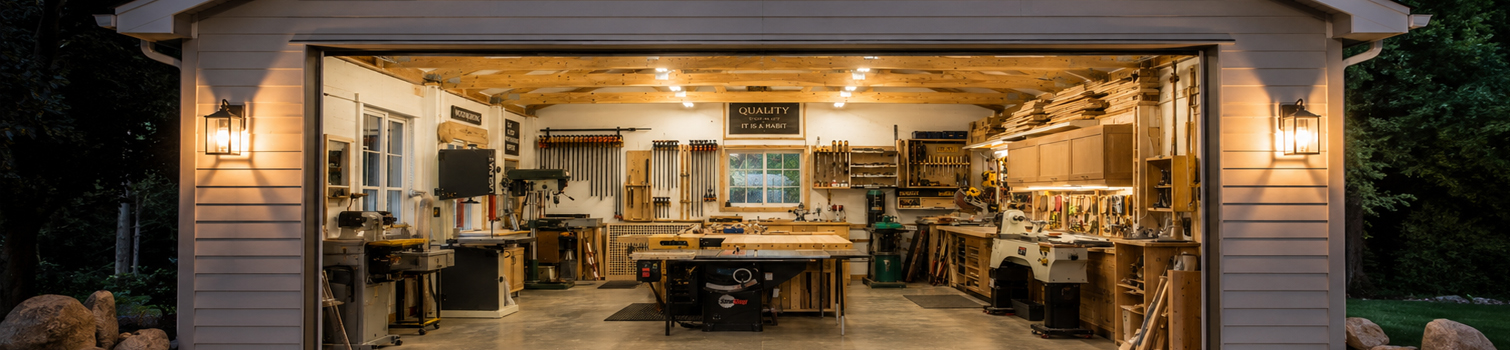
A real workshop isn’t just a garage with tools in it. It’s a purpose-designed space with the electrical capacity to run heavy equipment simultaneously, the HVAC to make year-round working comfortable, the lighting to work safely at any hour, and the layout that serves the actual workflow of the craft. Utah’s strong culture of skilled trades, weekend woodworking, metalworking, automotive restoration, and home fabrication drives consistent demand for dedicated workshop buildings that are designed from the floor plan outward by someone who actually understands what serious shop work requires. RainFire Builders designs workshop buildings with tradespeople’s input at every step.

  • 200-amp sub-panel with multiple 240V dedicated circuits
  • LED overhead shop lighting on independent circuits from tool power
  • Mini-split HVAC — independent of the main home system
  • Compressed air line rough-in and drop locations
  • Concrete floor finish — sealed, epoxy, or diamond-ground
  • Dust collection rough-in and ceiling-mounted fan positioning

What electrical does a serious workshop garage need in Utah?”

A proper workshop sub-panel should be 200 amps to support simultaneous high-draw equipment: table saw (15–20A), air compressor (15–20A), welder (50A 240V), dust collector (10–15A), and EV charger (50A 240V) if desired. Circuits should include multiple 20A 120V circuits for smaller tools and lighting, 240V circuits for stationary equipment, and overhead LED lighting on dedicated circuits separate from tool power — so a tripped tool breaker doesn’t leave you in the dark. RainFire Builders designs workshop electrical plans around actual equipment lists, not code minimums.

Utah’s HB 82 (2023) expanded homeowner ADU rights to include garage conversions on virtually any Wasatch Front residential lot. A garage built today with an ADU-conversion rough-in already installed becomes a rental unit in the future for a fraction of what a full conversion costs when that infrastructure has to be retrofitted. Plumbing stub-outs, sub-panel sized for a dwelling unit, proper insulation in walls and ceiling, window placement and sizes appropriate for a living space, and egress-compliant doors — these decisions cost very little extra during garage construction and change the entire economic trajectory of the building over its lifetime.

  • Plumbing rough-in — bathroom and kitchenette drain, supply, and vent locations
  • Sub-panel sized and wired for residential dwelling unit loads
  • Full wall and ceiling insulation to residential R-value standards
  • Window locations and sizes appropriate for ADU bedrooms
  • Separate entrance door — code-compliant for independent ADU access
  • Utah HB 82 compliance review for your specific municipality

How much more does an ADU rough-in add to a new garage in Utah?”

ADU conversion rough-in added during new garage construction typically adds $15,000–$30,000 to the base garage cost — covering plumbing rough-in, upgraded electrical, full insulation, and appropriate window and door placement. The same features retrofitted into a completed garage cost $40,000–$70,000+ due to the demolition and rework involved. At current Wasatch Front rental rates of $1,200–$1,800/month for a garage ADU, the incremental rough-in cost pays back in 12–20 months of rental income after full conversion — making it one of the most compelling construction investments available to Utah homeowners today.

Recruitment Executive Search

A carriage house is the highest-value structure on this list — and the one that most directly transforms a garage investment into a permanent income asset. Two vehicle bays at grade level, a fully finished dwelling unit above: a studio or one-bedroom apartment with its own entrance, kitchen, bathroom, and climate control. The income from the rental unit above offsets the carrying cost of the entire structure, and the garage below continues serving its primary purpose simultaneously. On lots with adequate setback from the street, carriage houses are an architectural landmark that improves the entire property’s character and appraisal value.

  • Two-story structure — garage below, ADU above
  • Engineered floor system between garage and living space
  • IBC dwelling unit compliance for upper-floor apartment
  • Independent entrance stair — exterior or interior per design
  • Full kitchen, bathroom, and living area above
  • Architectural carriage-style exterior with garage doors and dormer windows

What is the difference between a carriage house and a detached ADU in Utah?”

A carriage house combines garage bays at the ground floor with a dwelling unit above — a two-story structure that functions simultaneously as vehicle storage and a rental unit. A detached ADU is a single-story (or occasionally two-story) dwelling unit without a vehicle storage function below. Carriage houses are more expensive to build ($200,000–$380,000) but deliver two uses from one structure’s lot coverage footprint. Where lot coverage is constrained, a carriage house is often the most efficient way to add both vehicle storage and ADU rental income without consuming additional lot coverage.

The hobby room that isn’t actually a room — it’s the corner of the basement nobody vacates long enough for you to set anything up. The craft supplies that live in six different closets because there’s nowhere to consolidate them. The art studio, the ceramics space, the yoga room, the reading retreat — every one of these deserves a dedicated space that is yours alone, designed for what you actually do in it, and close enough to the house to use every day without feeling like an expedition. RainFire Builders builds she-sheds and hobby studios as properly permitted, fully insulated, year-round-conditioned spaces — not kit sheds from a big-box store that are uninhabitable for nine months of the year in Utah’s climate.

  • Fully insulated walls, ceiling, and floor for year-round use
  • Mini-split HVAC — independent climate control
  • Natural light design — windows and optional skylights
  • Dedicated electrical circuits for equipment and lighting
  • Plumbing rough-in for utility sink where desired
  • Custom interior — shelving, work surfaces, and storage to use

Do I need a permit for a she-shed or hobby studio in Utah?”

In most Utah municipalities, yes — any outbuilding over approximately 200 square feet requires a building permit, and any structure with electrical or plumbing requires the corresponding trade permits regardless of size. An unpermitted outbuilding creates insurance complications and may require costly retroactive compliance at resale. RainFire Builders pulls all required permits as standard scope on every outbuilding project — including small hobby studios where some homeowners assume permits aren’t required. The permit process for a small studio is straightforward and protects your investment.

Recruitment Executive Search

Utah’s rural-adjacent neighborhoods, horse properties, larger suburban lots, and agricultural parcels in Wasatch, Utah, and Tooele Counties have consistent demand for barn-style outbuildings that deliver serious storage and equipment capacity in a structure with real architectural character. A metal-sided agricultural pole barn serves one purpose. A wood-framed barn-style building with vertical board-and-batten siding, a gambrel or gable roof, and wide sliding doors serves the same functional purpose while dramatically improving the lot’s visual character and appraised value. RainFire Builders builds both — and helps clients choose based on the honest tradeoffs between cost, aesthetics, and long-term maintenance.

  • Gambrel, gable, and monitor roof profiles available
  • Board-and-batten, lap siding, and metal panel exterior options
  • Sliding barn door and roll-up door configurations
  • Interior hay loft, equipment storage, and workshop areas
  • Gravel, compacted base, or concrete floor options
  • Electrical for lighting and equipment loads

What is the cost difference between a pole barn and a wood-framed barn-style building in Utah?”

A basic pole barn (steel posts, metal roofing, metal siding) runs $35–$55 per square foot for a large structure in Utah — roughly $70,000–$110,000 for a 2,000 sq ft building. A wood-framed barn-style building with finished siding, wood windows, and architectural character runs $60–$90 per square foot for the same footprint — $120,000–$180,000. The wood-framed building is more expensive but appraised differently — it adds significantly more to the property’s value at resale than a comparable pole barn and is typically more compatible with HOA and municipal design standards in residential Utah communities.

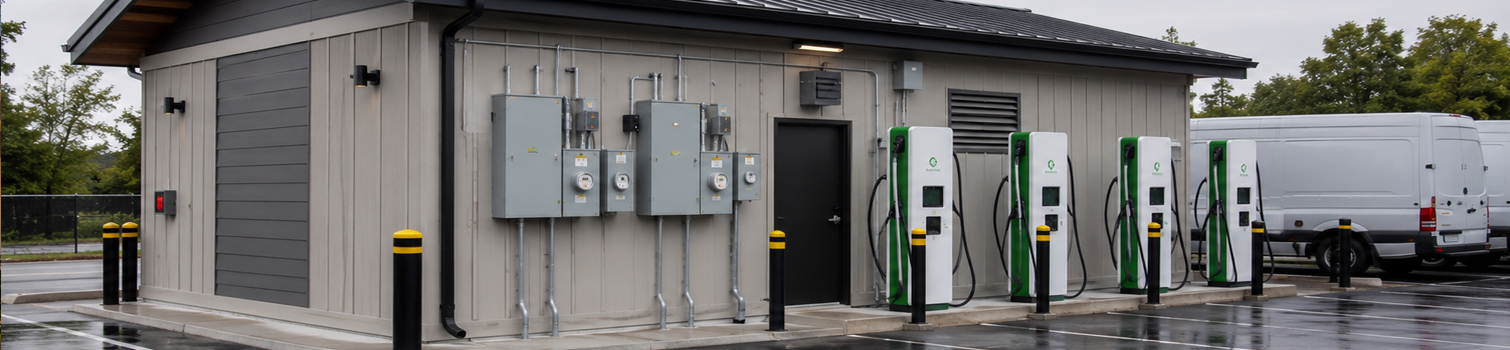
Commercial outbuildings — accessory structures on commercial and industrial properties used for equipment storage, fleet vehicle parking, material staging, or secondary operations — require IBC compliance, commercial-grade electrical systems, and often fire suppression depending on use and size. Utah’s growing commercial real estate market in the Lehi Silicon Slopes corridor, Sandy business parks, and rural industrial zones in Tooele and Utah Counties drives consistent demand for properly engineered commercial outbuildings that meet current commercial code. RainFire Builders manages the full commercial outbuilding scope: IBC code review, structural engineering, commercial electrical, fire suppression coordination, and city inspection management.

  • IBC code compliance for commercial-use accessory structures
  • Commercial electrical — 3-phase available where the utility provides it
  • Fire suppression rough-in coordination where required
  • ADA accessibility compliance for occupied commercial structures
  • Fleet vehicle storage with overhead door systems
  • Phased construction to maintain business continuity on campus

When does a commercial outbuilding require fire suppression in Utah?”

Under the Utah Fire Code and IBC, fire sprinkler suppression is required in commercial accessory structures based on building area, occupancy type, and use. Generally: storage buildings over 12,000 sq ft require suppression in most jurisdictions; hazardous materials storage triggers suppression at lower thresholds; and any occupied commercial building in a Group S (storage) or Group F (factory) occupancy may require suppression based on area. Requirements vary by municipality — some Utah cities have adopted more stringent local amendments. RainFire Builders reviews fire suppression requirements for every commercial outbuilding project during the pre-construction phase, before design and budget are committed.

From Permit to First Day Inside

The RainFire Build Process

Garages and outbuildings are often deceptively complex to permit — setback research, lot coverage calculations, fire separation requirements, and utility connections all require correct resolution before the foundation is poured.

Lot Feasibility First

Before design begins, we confirm what your lot allows — setbacks, coverage limits, and ADU eligibility. No design investment on a building that can’t be permitted as drawn.

Future-Proof by Default

ADU rough-in, 200-amp panels, EV circuits, and insulation upgrades are presented on every project — at the point where they cost a fraction of what retrofitting costs later.

the facts are the facts

why utah homeowners choose RainFire Builders for garages & outbuildings

Every contractor in Utah can frame a garage. Fewer understand that the decisions made before the foundation is poured — setback research, lot coverage calculations, future-proofing options, and ADU rough-in planning — determine whether the building you build today is the building you want to own for the next twenty years.

RainFire Builders approaches garage and outbuilding projects with the same pre-construction discipline we bring to custom home builds. We assess your lot’s constraints, present your options honestly, design for how you’ll actually use the space, and offer the future-proofing upgrades that cost almost nothing during construction and a great deal afterward.

We also self-perform all major trades in-house — framing, electrical, plumbing, insulation, and finish — which means the electrician and the framer are on the same team, the plumber doesn’t wait three weeks for a scheduling gap, and the project manager who answers your questions is the same person who manages the crew every day.

  • Pre-construction lot feasibility — setbacks, coverage, and ADU options confirmed before design

  • Future-proofing options presented honestly — costs and benefits, no upsell pressure

  • All ten interior trades self-performed one team — no scheduling gaps between subcontractors

  • 200-amp workshop electrical design as standard option — sized for actual use

  • Dedicated project manager on every project — one point of contact

  • Utah HB 82 ADU expertise — we know what garage conversions are permitted in your municipality

  • Utah HB 82 ADU expertise — we know what garage conversions are permitted in your municipality

One Team, All Trades

Framing, electrical, plumbing, insulation, and finish — all self-performed by RainFire Builders’ own crews. No subcontractor scheduling gaps or accountability voids.

ADU-Aware Design

Every garage we build is evaluated for ADU conversion potential. We build with that future in mind — whether it’s three months away or ten years away.

UTAH WINTERS ARE NO JOKE

Your Vehicles Deserve Better Than January in the Driveway

Salt Lake City’s heating design temperature is −5°F. Mountain communities reach −20°F or colder on design nights. Every vehicle, every tool, and every piece of equipment left exposed to Utah winters is being damaged in ways that don’t always show up immediately.

Battery degradation in EVs and hybrids accelerates dramatically below freezing — cold soaking overnight before a morning commute means reduced range for the day. Engine oil thickens in extreme cold, increasing wear on every cold start. Rubber seals, trim materials, and paint finishes exposed to Utah’s UV-intense sunny days followed by sub-zero nights age faster than any manufacturer’s specification anticipates.

A heated, insulated garage isn’t a luxury in Utah’s climate. It’s maintenance cost reduction, operating efficiency improvement, and depreciation protection — all in one structure. RainFire Builders builds garages that protect what you’ve invested in, year after year.

−5°F Design Temperature

Salt Lake City’s heating design temp — the cold your vehicles face overnight without garage protection, every winter.

EV Battery Protection

EV batteries cold-soaked below 20°F lose 20–40% of daily range and charge more slowly. A heated garage eliminates both penalties.

Utah UV Intensity

At 4,200 ft elevation, UV radiation is ~25% more intense than at sea level — accelerating paint fade and rubber seal degradation on exposed vehicles.

Mountain Community Cold

Park City, Heber, and Midway regularly see −20°F design temperatures. Heated garages in mountain communities are essential infrastructure, not optional comfort.

Detailed – Dedicated – Professional

our latest projects

See what projects we have done for others in your
same situation, with the sources we have at our call
EVERY TOOL, VEHICLE, & HOBBY – FINALLY HAS A HOME

Stop Renting Storage Space for Things You Own the Land For

The storage unit bill you pay every month. The vehicles sit in Utah winters. The workshop that exists only in your plans. The ADU income you’re not collecting from a garage that could be generating it. Every one of these is a solvable problem — and the solution starts with a conversation about what’s possible on your specific lot. RainFire Builders offers free on-site building feasibility assessments across the Wasatch Front. We’ll tell you exactly what you can build, what it will cost, and what it will be worth — before you commit to anything.

REQUEST A FREE BUILDING ESTIMATE

CALL (385)336-7246