
Exterior Construction – Decks & Patios
Utah Outdoor Living,
Built To Last
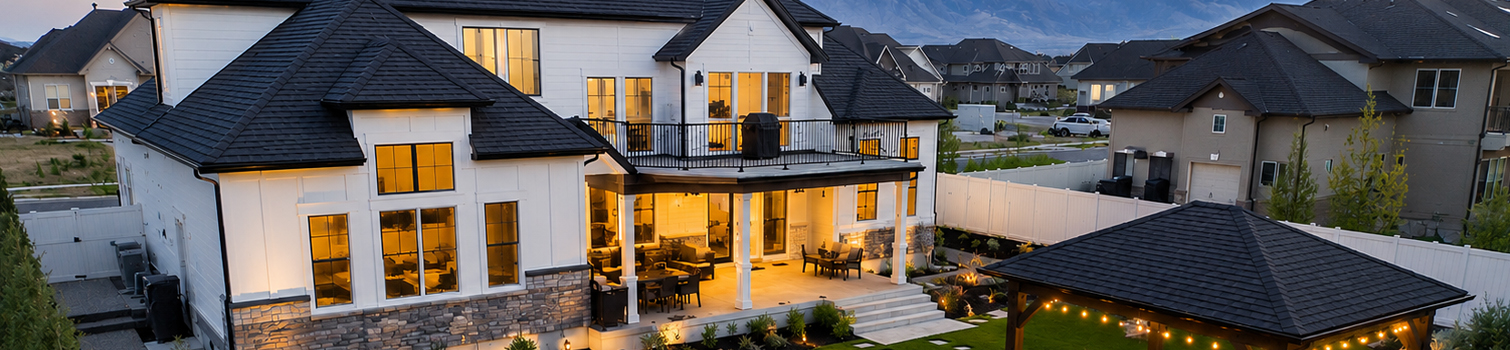
Utah’s 300+ days of sunshine make outdoor living an actual investment — but the same climate that makes outdoor space so valuable also punishes decks and patios that aren’t built for it. Frost depths of 30–48 inches mean shallow footings fail within years. High-altitude UV intensity at 4,200+ feet accelerates material degradation faster than sea-level specifications predict. WUI fire zones in the Wasatch Front foothills govern material choices. A deck built right in Utah is built for all of it.
OUR DECKS & PATIOS SERVICES
UTAH-SPECIFIC CONDITIONS
Five Factors That Make Utah
Deck Construction Different
Utah’s combination of deep frost penetration, intense high-altitude UV, heavy mountain snowpack loads, WUI fire zone regulations in the foothills, and permit requirements that vary meaningfully by municipality makes deck construction on the Wasatch Front more specification-dependent than in most U.S. markets. Getting these right at the design stage — not after the permit is rejected or the footings settle — is what separates a deck built for Utah from a deck built to a national template.
Snow load is a structural design variable that many contractors from other markets overlook when working in Utah. The Wasatch Front valley floor communities carry a ground snow load of 30 lbs per square foot (psf) in most IRC jurisdictions, and foothill communities can reach 40–50 psf. Mountain communities like Park City carry 70–100+ psf in some zones. Joist spans and beam sizing designed for the standard 40 psf live load may be inadequate for the actual snow accumulation a Utah deck will see. RainFire Builders designs deck framing to the actual ground snow load for the project municipality — not to a national default that may undersize the structure in Utah’s mountain climate.
Ledger flashing is the deck detail that most directly affects the long-term condition of the house. Every ledger-attached deck in Utah should have a continuous metal Z-flashing or self-adhering membrane over the top of the ledger with a positive drain to the exterior, the siding removed at the ledger location and properly reinstated with a gap, and the ledger fastened to the structural rim or band joist with lag screws or through-bolts sized per IRC Table R507.2.3 — not to the sheathing, and not with nails. Moisture behind a ledger without proper flashing deteriorates the house rim joist silently for years before structural damage is discovered. It is the most commonly deficient deck detail on the Wasatch Front and the one with the most expensive consequences.

OUR DECK &
PATIO SERVICES
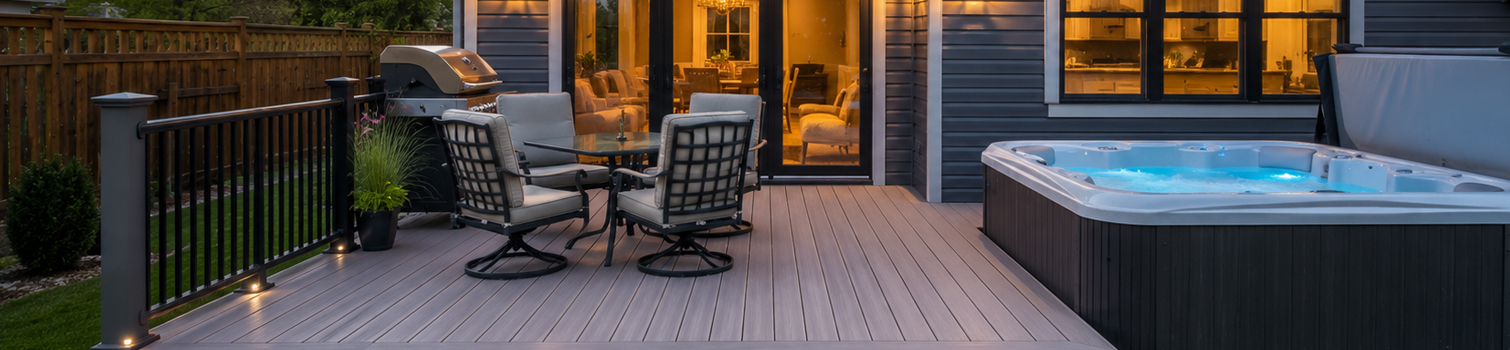
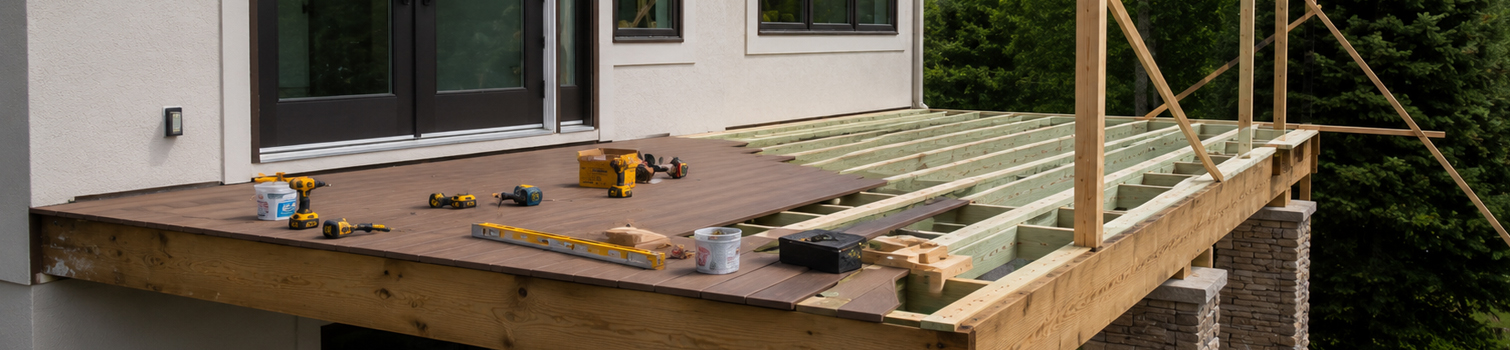
Every project is managed from site assessment through permit, structural design, excavation, framing, surface installation, railing, and final inspection — with frost-depth footings and IRC Chapter 5 code compliance on every build.
HOW WE WORK
The RainFire Deck & Patio Build Process
From the first site visit through the final inspection, every deck and patio we build is permitted, engineered for Utah’s snow loads and seismic requirements, and built with frost-depth footings — because those decisions cannot be corrected after the concrete is poured.

Why Utah Decks Demand More Than the National Standard
Utah has the most valuable outdoor living climate in the United States by most measures — 300+ sunny days, mild shoulder seasons, and mountain views that make an outdoor space a genuine extension of the home rather than an occasional-use amenity. That climate also imposes specific demands on the structures built for it. Deep frost penetration, high UV intensity, significant snow loads, WUI fire zone designations in the foothills, and SDC D seismic requirements all affect how a deck must be designed and built in Utah to perform over its intended service life.
Frost heave is the single most common cause of deck structural failure on the Wasatch Front. A deck with footings at 18 inches will begin showing movement within the first 3–5 winters as moisture in the soil below the footing freezes and expands, lifting the footing with it. Over 10–15 years, the cumulative effect is a visibly uneven deck, stressed ledger-to-house connections, and eventually failed hardware connections at the posts. The cost to replace shallow-footing footers after a deck is built — which requires removing the structure, excavating to frost depth, and repouring — is multiples of the marginal cost to do it correctly during original construction. RainFire Builders never installs shallow footings regardless of what a permit-minimum requirement might technically allow.
The 20-year total cost comparison between wood and composite decking is consistently favorable to composite in Utah’s climate. A pressure-treated wood deck installed for $16,000 on a 300 sq ft deck will require $800–$1,500 in annual cleaning, sealing, and periodic board replacement over 20 years — a total cost of $32,000–$46,000 over the product life. A composite deck installed for $25,000 on the same footprint requires essentially no maintenance cost beyond cleaning — a total 20-year cost of $26,000–$28,000. The composite option is the better financial decision and the better outdoor living decision for most Utah homeowners with a 10+ year horizon.
