
Project Management – Scheduling
The Plan That Reflects Reality –
Not The Original Wish
Most construction schedules are accurate on day one and fictional by week three. A RainFire Builders production schedule is a written, dated, trade-sequenced plan that gets updated every single week — showing the current projected completion date and the reason for any change from the original. Not the plan we hoped for. The plan we’re actually executing.
OUR SCHEDULING SERVICES
Production Schedule Development
Trade Sequencing Coordination
Critical Path Management
Milestone Scheduling
Material Lead Time Planning
Weather Delay Management
Permit Timeline Planning
Weekly Schedule Updates
Lookahead Schedules
Schedule Recovery

Licensed & Insured
SCHEDULING FUNDAMENTALS
A Schedule is a Document, Not a Feeling
About When Things Will Happen
Construction scheduling is the discipline of organizing every phase of a project into a logical, time-sequenced plan that assigns work to specific periods, identifies the dependencies between phases, and establishes a realistic completion date. The most important word in that sentence is “realistic.” A schedule built to tell the client what they want to hear rather than what the work actually requires is not a management tool — it is a promise that will be broken.
A written production schedule does three things that a verbal timeline commitment cannot: it forces the contractor to think through every phase and its prerequisites before mobilization (exposing gaps in planning before they become gaps on the job site); it creates a shared reference document that the client and contractor can both look at to assess project status; and it provides the baseline against which actual progress is measured and deviations are explained. A project without a written schedule has no mechanism for the client to know whether the project is on track. They can only wait and hope.
The RainFire Builders scheduling system uses a master production schedule developed before mobilization, updated weekly throughout construction, with a 3-week lookahead embedded for detailed near-term planning. Every schedule includes predecessor relationships (which phases must complete before which others can start), permit inspection hold points, material delivery milestones for long-lead items, and weather buffer for weather-sensitive phases. The schedule is shared with the client every week — not as a summary statement that “things are going well,” but as an actual document showing current status versus original plan.
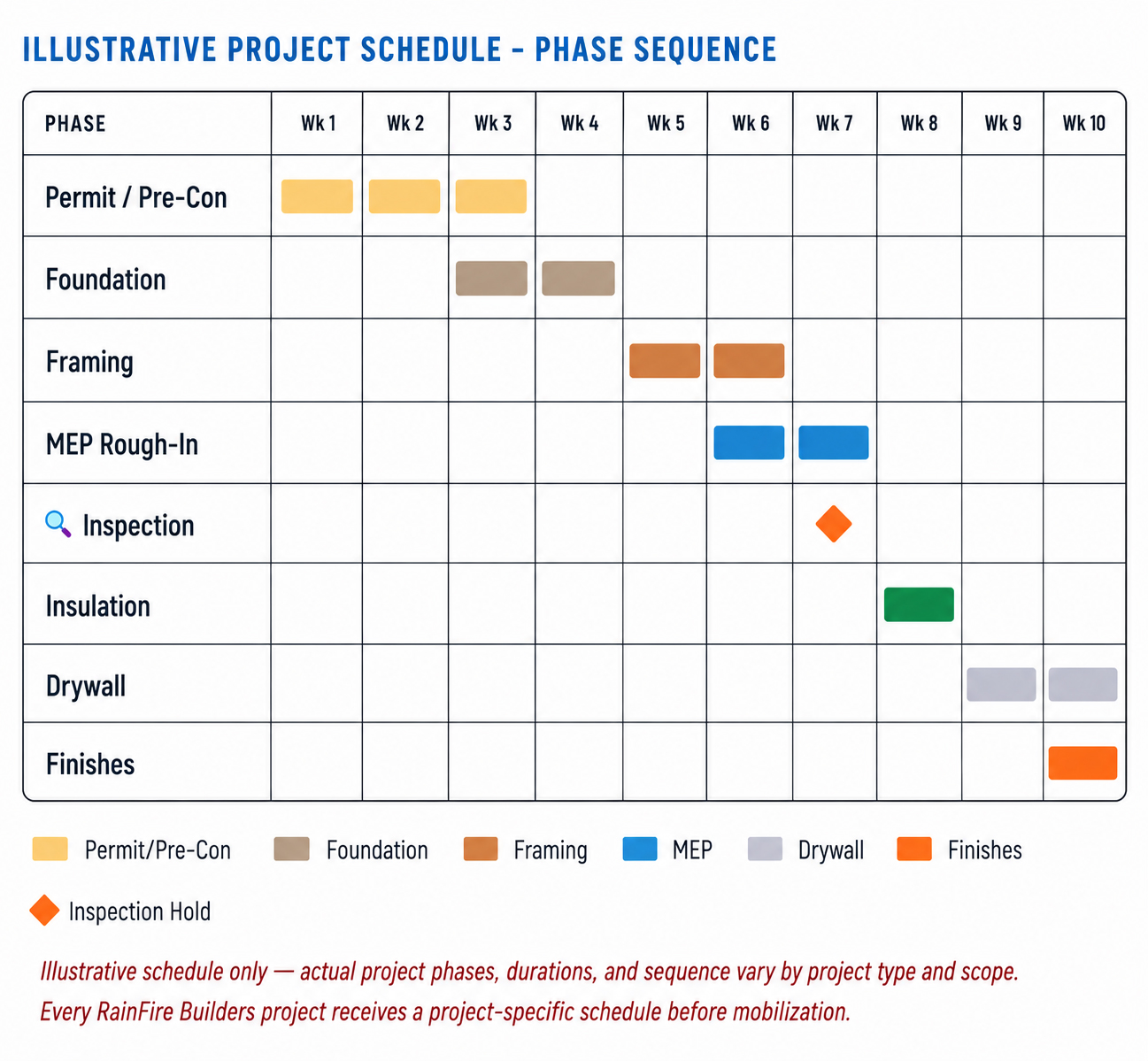
RainFire Builders’ self-performance of all ten interior trades provides a structural scheduling advantage over subcontractor-dependent contractors: the ten most frequently delayed phases of residential interior construction are managed by one project manager with direct visibility into all ten crew schedules simultaneously. There are no phone calls to subcontractors asking when they can fit the project into their calendar. The sequencing is managed internally.

OUR SCHEDULING SERVICES
Every scheduling discipline — from the pre-mobilization master schedule through weekly updates, critical path tracking, and schedule recovery — is applied as a formal system on every RainFire Builders project.
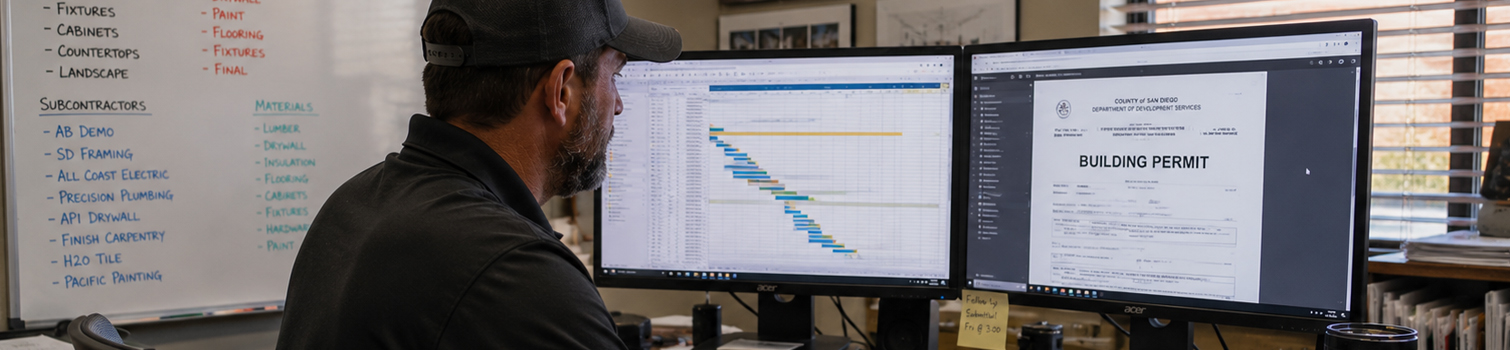
Written master production schedules developed before mobilization — every phase sequenced, dated, and assigned to the responsible trade. Critical path identified and highlighted. Permit processing timeline for the specific municipality built into the pre-construction period. Long-lead material delivery milestones embedded as hard constraints. Weather buffer applied to all weather-sensitive exterior phases. The schedule is completed before mobilization because the pre-construction planning process is where schedule failures are prevented, not discovered.
The detailed planning of which trade works when, in what area, for how long, and what must be complete before they can start — managed for all ten interior trades simultaneously by one project manager. The correct interior sequence (framing → MEP rough-in → structural inspection → insulation → drywall → painting → trim → cabinetry → finish plumbing/electrical → flooring) is not just a best practice — it is the sequence required by permit inspection sequencing and by physical construction constraints. Deviations from the proper sequence either create rework or require invasive repair.
Identification and active management of the critical path — the sequence of tasks that determines the minimum possible project duration. Any delay to a critical path task delays the project end date by the same duration. For typical Utah residential construction, the critical path often runs through permit approval, foundation with cold-weather cure provisions, window lead time, framing, MEP rough-in inspection, insulation, drywall, and finishes. Critical path tasks receive prioritized attention: earliest materials order, daily progress tracking, and immediate intervention when progress deviates from the plan.
Systematic identification of all long-lead materials at the estimate stage — windows (8–20 weeks), HVAC equipment (6–14 weeks), electrical panels (4–12 weeks), custom cabinetry (10–16 weeks), specialty tile and stone (6–20 weeks) — with order timing coordinated to arrive when the construction sequence requires them. Long-lead items that sit on the critical path are ordered before construction begins or simultaneously with permit submission, not when framing is complete and everyone suddenly realizes the windows aren’t here. Material delivery tracking against the production schedule is part of the weekly update.
Every active RainFire Builders project receives a written weekly schedule update — showing what was accomplished in the prior week versus what was planned, the schedule for the coming week, the current projected completion date versus the original, any schedule deviations with their cause, and any pending client decisions required to maintain the schedule. The update is provided in writing, not as a verbal summary on a phone call. The client should never learn that their project is behind schedule by visiting the site and doing the math themselves.
When a project falls behind schedule — from a legitimate weather event, a material delivery failure, or a scope change that extended a phase — RainFire Builders develops a written schedule recovery plan identifying the available options: overtime on a critical-path trade, re-sequencing of non-critical tasks, expedited delivery of a delayed material, or frank communication that the completion date needs to be adjusted. Recovery plans are presented to the client with the cost implications of each recovery option and a recommendation. No project is allowed to slip silently past the original completion date without a documented explanation and a plan for what happens next.
HOW WE SCHEDULE
The RainFire Builders Scheduling Process
A construction schedule is produced through a specific process — not assembled on the morning of mobilization. Here is how RainFire Builders moves from a signed contract to a running, weekly-updated production schedule.
Pre-Mobilization Schedule Development
The master production schedule is developed during the pre-construction period — after contract execution and before mobilization. This is when the project manager sequences every phase of work, assigns durations based on scope and crew size, identifies the critical path, and builds in the project-specific variables: the current permit processing time for this municipality, the lead times for this project’s specific window and HVAC selections, the concrete cure window based on the planned foundation start date, and weather buffer for any planned exterior phase. The schedule is shared with the client and reviewed before the first crew mobilizes. Questions and adjustments happen at this stage, not mid-construction.
Long-Lead Material Order Coordination
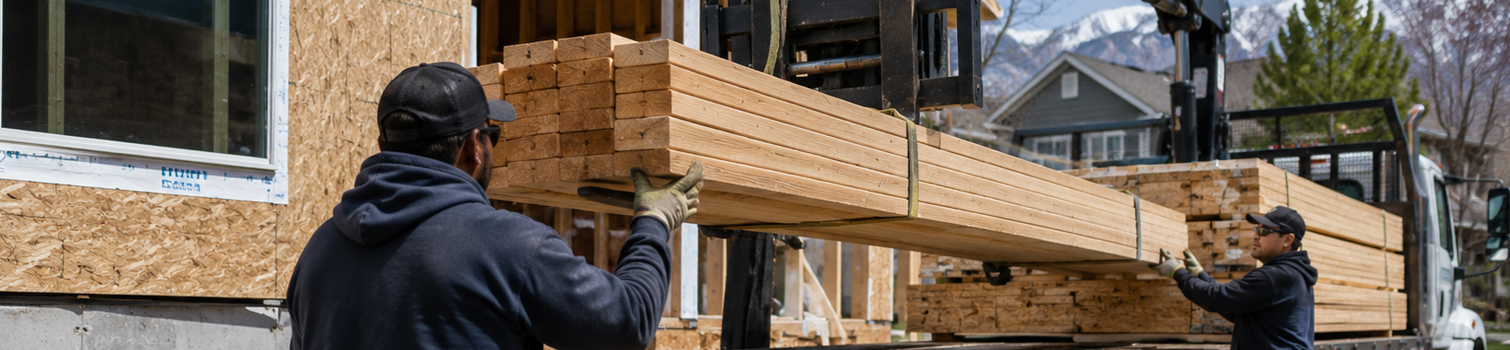
Immediately after the production schedule is finalized, every material or product with a lead time that falls on or near the critical path is identified and ordered — or in active production for future ordering. Windows and exterior doors are ordered based on the confirmed construction schedule delivery date, not when framing starts. HVAC equipment is selected and ordered with the required delivery date specified to the supplier. Custom cabinetry lead time is confirmed, and the order is timed to arrive when cabinet installation is scheduled. Material delivery dates are entered as hard milestones in the production schedule, and any slippage in a supplier’s confirmed delivery date triggers immediate schedule review to assess critical path impact before it becomes a field-visible delay.
3-Week Lookahead — Operational Planning
Each week, the project manager publishes a 3-week lookahead schedule for the internal crew supervisors — a daily-resolution view of the next three weeks of work. The lookahead shows which trades work in which areas on which days, what materials need to arrive by when, what inspections need to be scheduled by when, and any identified constraints that need to be resolved before work is impacted. The lookahead is the operational tool that prevents the most common on-site coordination failures: two trades in the same space simultaneously, inspection holds that weren’t scheduled in time, and materials that weren’t on site when they were needed. Clients receive a summary version of the upcoming week as part of the weekly update.
Weekly Schedule Update & Client Communication
Every week during active construction, the project manager updates the master production schedule to reflect actual progress — adjusting phase completion dates to reflect what actually happened, updating the critical path if any critical tasks were delayed, and recalculating the current projected completion date. The updated schedule summary is included in the weekly client update along with: a summary of the prior week’s accomplishments, the plan for the coming week, any schedule deviations and their cause, the current projected completion versus the original, and any client decisions required to maintain the current schedule. This weekly update is the mechanism that prevents clients from being surprised. When the schedule changes, the client hears about it from their project manager in the weekly update, not from their own observation during a site visit.
Schedule Recovery & Adjustment
When a deviation from the master schedule accumulates to a point where the projected completion date changes, the project manager prepares a written schedule recovery assessment — identifying the cause of the delay, the recovery options available (overtime on critical path trades, re-sequencing of non-critical tasks, expedited material delivery, or a revised completion date), the cost impact of each recovery option, and a recommendation. The client receives this assessment in writing and makes an informed decision about how to respond. On projects where the delay results from contractor error or omission, RainFire Builders absorbs the recovery cost. On projects where the delay results from legitimate excused causes (weather, client-initiated scope change, code-required change), the recovery options and their costs are presented to the client transparently.

Why Utah Construction Schedules Need Utah-Specific Discipline
The single largest source of schedule failure in Utah residential construction is the independent subcontractor availability gap. A project manager calls the electrician on Monday to start rough-in — the electrician is committed to another job until the following Wednesday. The insulation crew is ready, but can’t start until rough-in passes inspection. The drywall crew is booked for the following week, but now the framing-to-drywall sequence runs 12 days behind plan. Each of these individual gaps is small. Over a 10-trade interior buildout, they accumulate into 6–10 weeks of avoidable schedule extension. RainFire Builders eliminated this failure mode by self-performing all ten interior trades — sequencing is managed by one project manager with direct availability of all ten crews simultaneously.
Utah’s permit processing timelines are the second most significant schedule variable that contractors outside the Wasatch Front consistently underestimate. A contractor experienced in a market where permits are processed in 2 weeks will build a 2-week permit buffer into their pre-construction schedule for every Utah project — and then be genuinely surprised when Salt Lake City’s current plan check queue runs 6–8 weeks. RainFire Builders tracks current processing times in every Utah municipality we regularly serve and updates the pre-construction schedule template for each municipality as conditions change.
Cold-weather concrete scheduling is another Utah-specific constraint that shows up most dramatically in the gap between a schedule prepared by someone who learned concrete work in a warm climate and the reality of a foundation started in October in the Wasatch Back. Concrete placed at 35°F requires more than double the standard cure monitoring time. Projects scheduled to have a foundation complete in 10 days in late October routinely require 18–21 days when cold-weather curing protocols are applied correctly. RainFire Builders applies Utah-altitude, Utah-season concrete cure windows to every foundation schedule.
RainFire Builders self-performs all ten interior trades under one project manager with direct crew availability. No subcontractor availability gaps. No phone calls asking when a trade can fit the project into their calendar. The sequencing is managed internally, and the schedule reflects what can actually be executed — not what would happen if every subcontractor showed up exactly when planned.
RainFire Builders tracks current permit processing times for every Utah municipality we serve and applies the actual current timeline to every pre-construction schedule. Not a generic 4-week estimate. The actual, current processing time for the specific project municipality — which can range from 2 weeks to 12 weeks depending on jurisdiction and project type.
Every long-lead material on or near the critical path is identified at the estimate stage and ordered before or simultaneously with construction start — not when the phase that requires it begins. Windows, HVAC equipment, electrical panels, and custom cabinetry are tracked against their confirmed delivery dates as hard milestones in the production schedule.
Every active project receives a weekly written schedule update showing current status against the original plan, current projected completion date, any deviations and their cause, and upcoming client decision requirements. Clients should never learn their project is behind schedule by visiting the site and doing the math. They learn it from their project manager’s weekly update.
UTAH-SPECIFIC SCHEDULING
Six Factors That Make Wasatch Front Scheduling Different
Construction scheduling in Utah has specific variables that contractors from other markets don’t instinctively account for — and that contractors who don’t know Utah’s actual conditions build into their schedules inaccurately, if at all. These variables don’t produce delays on a properly built schedule. They produce delays on schedules built to templates rather than reality.
Permit processing timelines on the Wasatch Front vary meaningfully by municipality. Salt Lake City currently processes residential permits in 4–8 weeks for standard residential scope; some suburban municipalities process in 2–3 weeks; others with active development pressure can run 8–12 weeks. An experienced Wasatch Front contractor builds the permit timeline for the specific municipality into the pre-construction schedule, not a generic “4–6 weeks” estimate. This single variable determines when construction can start and has enormous leverage on the overall project schedule.
Concrete cure time in Utah’s cold weather months is a frequently underestimated scheduling constraint. Concrete placed when overnight temperatures fall below 40°F requires cold-weather curing protocols — heated enclosures, insulated blankets, extended cure period — and takes longer to reach design strength. A foundation poured in November in the SLC valley requires 14 days of cold-weather protection rather than the 7 days needed for a June placement. This doesn’t prevent winter concrete work; it requires that it be scheduled correctly. Foundation crews who don’t adjust for Utah winter concrete schedules produce either quality failures or false schedule dates.
Long-lead material items at current Utah market lead times include: windows and exterior doors (8–20 weeks for custom sizes and finishes), HVAC equipment (6–14 weeks for residential systems), electrical panels and gear (4–12 weeks), custom cabinetry (10–16 weeks), and specialty tile and stone (6–20 weeks). Every one of these items sits at or near the critical path on a typical new construction or major remodel project. They must be ordered before — sometimes well before — construction starts, and their delivery dates must be built into the production schedule as hard milestones.
PERMIT PROCESSING: 2 to 12 WEEKS BY MUNICIPALITY
Processing times vary significantly across Wasatch Front municipalities. Sandy and South Jordan: 2–4 weeks. Salt Lake City: 4–8 weeks for standard residential. Active-development areas with plan check backlog: 8–12 weeks. Special reviews (WUI fire zone, hillside grading, HOA) add time. RainFire Builders builds the actual current timeline for the specific project municipality into every pre-construction schedule — not a generic 4-week estimate.
COLD-WEATHER CONCRETE CURE – OCTOBER TO MARCH
Foundation and flatwork concrete placed when overnight temperatures fall below 40°F requires cold-weather curing protocols and extended cure times — 14+ days versus 7 days in warm weather. Winter concrete work is entirely feasible in Utah when scheduled correctly; it becomes a quality and schedule failure when treated as a summer placement. RainFire Builders builds extended cure windows into every foundation schedule from October through March and coordinates cold-weather curing equipment before placement, not after.
LONG-LEAD ITEMS: 8-20 WEEKS FOR WINDOWS & HVAC
Current Utah market lead times: windows and exterior doors (custom) 8–20 weeks; HVAC equipment 6–14 weeks; electrical panels 4–12 weeks; custom cabinetry 10–16 weeks; specialty tile and stone 6–20 weeks. Items on or near the critical path that arrive late extend the project end date by the same amount they are late. RainFire Builders identifies all long-lead items at the estimate stage, orders them before construction starts (or simultaneously with permit submission), and tracks delivery against the production schedule.
WEATHER WINDOWS FOR EXTERIOR WORK
Utah’s exterior work season is constrained at the shoulder ends: roofing in below-freezing conditions requires adhesive strip pre-activation and modified installation sequence; siding and window installation in sustained cold weather create air sealing quality risks; concrete flatwork is weather-limited (see above). Scheduling exterior envelope work for completion before the first sustained cold period reduces both schedule risk and quality risk. RainFire Builders builds weather buffers into weather-sensitive phases rather than claiming weather delays after the fact.
IN-HOUSE TRADES – NO SEQUENCING GAPS
The most common residential construction schedule delay is the gap between trades: the framing crew finishes Thursday; the plumber can’t start until Tuesday of the following week because they’re on another job. Multiply this by ten trades, and an otherwise executable schedule extends by 4–8 weeks on a typical full-scope interior project. RainFire Builders self-performs all ten interior trades — sequencing is managed by one project manager with direct crew availability, eliminating the independent subcontractor availability gap.
ELEVATION & SEASONAL ACCESS
Mountain and foothill project sites add seasonal scheduling complexity: access roads may be impassable after snowfall without plowing; material deliveries require coordination with site conditions; excavation in frozen ground is limited and expensive; and concrete work at elevation above 5,500 feet may have shorter weather windows than valley sites. Projects in Park City, Heber City, Midway, and mountain communities require scheduling adjustments that valley-focused contractors sometimes miss.
COMMON QUESTIONS
CONSTRUCTION SCHEDULING FAQs
Honest answers to the questions clients most commonly ask about construction project scheduling — written from the client’s perspective.
A production schedule is a written, time-sequenced plan organizing every phase of a construction project into a logical order with assigned durations and target dates. A complete schedule includes: every significant phase of work, the trade responsible for each phase, planned start and end dates, predecessor relationships (which phases must complete before others can start), permit inspection hold points, critical material delivery dates, and the planned project completion date. A schedule that lists phases without dates, or without predecessor relationships, is not a production schedule — it is a list. Every RainFire Builders project receives a project-specific production schedule before mobilization, shared with the client in writing.
Weekly on any active project. The update should reflect what actually happened in the prior week versus what was planned, and recalculate the current projected completion date based on actual progress. A schedule that is never updated is a plan that became fiction on the first day conditions deviated from the original projection — and most projects deviate within the first two weeks. Most construction delays don’t appear suddenly; they accumulate incrementally through weekly deviations that are never adjusted in the schedule. RainFire Builders updates every active project’s schedule weekly and shares the updated status with the client — so the client always knows the current projected completion and the reason for any difference from the original plan.
Critical Path Method (CPM) identifies the sequence of tasks that determines the minimum possible project duration. Any delay to a task on the critical path delays the project end date by the same amount. Tasks not on the critical path have “float” — they can be delayed by the amount of their float without affecting the end date. For a typical Utah residential project, the critical path often runs through: permit approval, foundation with cold-weather cure time, window delivery and installation, framing, MEP rough-in inspection, insulation, drywall, and finishes. Understanding the critical path allows the project manager to focus schedule management attention on the tasks that matter most to the completion date — not all tasks equally.
Five primary causes: subcontractor availability gaps (scheduled trade is committed elsewhere — the most common cause in residential construction); material delivery delays for long-lead items not identified as critical path items; permit processing delays not accurately built into the pre-construction schedule; scope creep through undocumented change orders that extend phase durations without schedule adjustments; and weather delays not buffered into the schedule. RainFire Builders addresses the first cause structurally by self-performing all ten interior trades. Long-lead items are identified at the estimate stage. Permit timelines are municipality-specific. Change orders document schedule impact. Weather buffer is built into weather-sensitive phases at schedule development.
Trade sequencing is the planned order in which trades perform their work — determined by technical requirements (some work physically cannot happen before other work) and efficiency optimization. The correct interior rough-to-finish sequence: framing → MEP rough-in → structural inspections → insulation → drywall → painting → trim → cabinetry → finish MEP → flooring. Deviations — installing drywall before all MEP rough-in inspections, or flooring before painting — create rework. Trade sequencing becomes a scheduling problem when subcontractors are unavailable when the sequence requires them, creating idle time for other trades waiting. RainFire Builders’ in-house management of all ten trades means one project manager controls the sequencing with direct availability — not ten independent subcontractors with their own priorities.
Lead times for common long-lead items in the current Utah market: custom windows and exterior doors (8–20 weeks), HVAC equipment (6–14 weeks), electrical panels (4–12 weeks), custom cabinetry (10–16 weeks), specialty tile and stone (6–20 weeks). When these items sit on or near the critical path and aren’t ordered early enough, they extend the project end date by exactly how late they arrive. A window package ordered at framing start (week 6) with a 16-week lead time won’t arrive until week 22 — by which time framing, MEP, insulation, and drywall could have proceeded except that window installation is a prerequisite for proper air sealing and final exterior closure. RainFire Builders identifies all long-lead items at the estimate stage and orders them before construction begins.
Weather delays are handled through two mechanisms: buffers built into weather-sensitive phases at schedule development, and documentation of legitimate weather events that trigger excused delay provisions. We build cold-weather concrete cure windows into every foundation scheduled between October and March. We build a weather buffer into exterior work phases. For legitimate weather events — conditions that make work unsafe or impossible per industry standards — RainFire Builders documents the event, the affected phase, and the duration of the impact, and communicates the schedule effect to the client in the weekly update. We do not claim weather delay for conditions that experienced Utah contractors should plan for as normal. Cold temperatures in January are not a surprise; they are a specification and scheduling constraint that was known at the time the schedule was built.
A lookahead schedule (also called a short-interval or rolling horizon schedule) is a detailed near-term work plan — typically 3 to 6 weeks — that translates the master production schedule into daily or weekly crew-level tasks. Where the master schedule shows “framing: weeks 4–8,” the lookahead shows which specific framing tasks are assigned to which crew on which day, what materials need to arrive by when, and what inspections need to be scheduled. Lookahead schedules are the operational tool that prevents the most common on-site coordination failures: two trades in the same space at the same time, inspection holds that weren’t scheduled, and materials that weren’t on site when needed. Clients receive a summary version of the upcoming week’s work as part of the weekly project update.
The RainFire Standard
WHY CHOOSE RAINFIRE BUILDERS FOR A PROJECT THAT FINISHES WHEN IT SHOULD?
Written Schedule Before Mobilization
The master production schedule is completed and shared with the client before the first crew mobilizes — not assembled in the first week of construction. Pre-mobilization planning is where schedule failures are prevented, not discovered after they’ve happened.
10 Trades — No Gaps
Structural self-performance of all ten interior trades eliminates the most common residential construction schedule failure: the subcontractor availability gap. One project manager, ten crews, one schedule — without the daily negotiation with independent subcontractors that accumulates into weeks of avoidable delay.
Weekly Updates — Reality, Not Optimism
The weekly schedule update shows the current projected completion based on actual progress — not the original plan maintained as fiction to avoid a difficult conversation. When the schedule changes, the client hears about it from their project manager in the weekly update, with the cause and recovery options clearly stated.
Utah-Specific Scheduling
Permit timelines are built from actual municipality processing times, not national averages. Cold-weather concrete cure windows appropriate for Utah’s climate. Long-lead items were identified and ordered before mobilization. Weather buffer in weather-sensitive phases. The schedule is built for where and when the project is actually happening.
CONTINUE THE PROCESS:
RELATED PROJECT MANAGEMENT SERVICES
Estimates
The schedule begins at the estimate – where long-lead items are identified, permit timelines are assessed, and the production sequence is first sketched. An estimate without a scheduling review is an estimate without a realistic completion date. | Explore More About Estimates
Job Costing
Schedule and cost are linked; every change order documents both cost and schedule impact. The monthly job cost report and the weekly schedule update together give the client complete financial and timeline visibility throughout the project. | Explore Job Costing
Change Orders
Every change order documents its schedule impact in calendar days. Undocumented verbal scope additions that extend phase durations without schedule adjustment are the most common source of unexplained schedule slippage on residential projects. | Explore Change Orders
Inspections
Permit inspections are scheduled hold points – no subsequent phase can begin until the preceding inspection is passed. Inspection scheduling is built into the production schedule as hard milestones, managed by the project manager, not discovered on the morning the next trade is scheduled to start. | Explore About Inspections
Start Your Project
Ready to discuss your project’s timeline? RainFire Builders provides written assessments as part of the pre-construction process. Contact us to start the conversation about your Utah construction project. | Get Your Free Estimate
All Project Management
Return to the complete project management overview – estimates, scheduling, job costing, change orders, inspections, and quality assurance. | Go Back to the Beginning
Written. Dated. Updated Every Week.
Know Exactly When Your Project Will Be Done — And Why.
Most construction clients spend their project in a state of uncertainty — visiting the site, trying to read the tea leaves, and not getting a straight answer when they ask “when will this be done?” A RainFire Builders project is different. You receive a written production schedule before mobilization, a written update every week showing current status versus original plan, and a written explanation whenever the projected completion date changes. No surprises. No unrealistic promises. Just the current, honest projection — and a team structured to execute it without the subcontractor gaps that turn reasonable timelines into open-ended ordeals.
Call us now at (385) 336-7246 or request an estimate online. We’ll start on your property’s project and your future with care.
We Make It Happen –
Request an Estimate
Schedule your in-person consultation. Let’s get your project started
