
Framing2026-05-29T20:22:48+00:00
INTERIOR CONSTRUCTION – FRAMING

INTERIOR FRAMING
With RAINFIRE BUILDERS
About Avada Recruitment Agency

GET A FREE FRAMING ESTIMATE

LEARN MORE BELOW

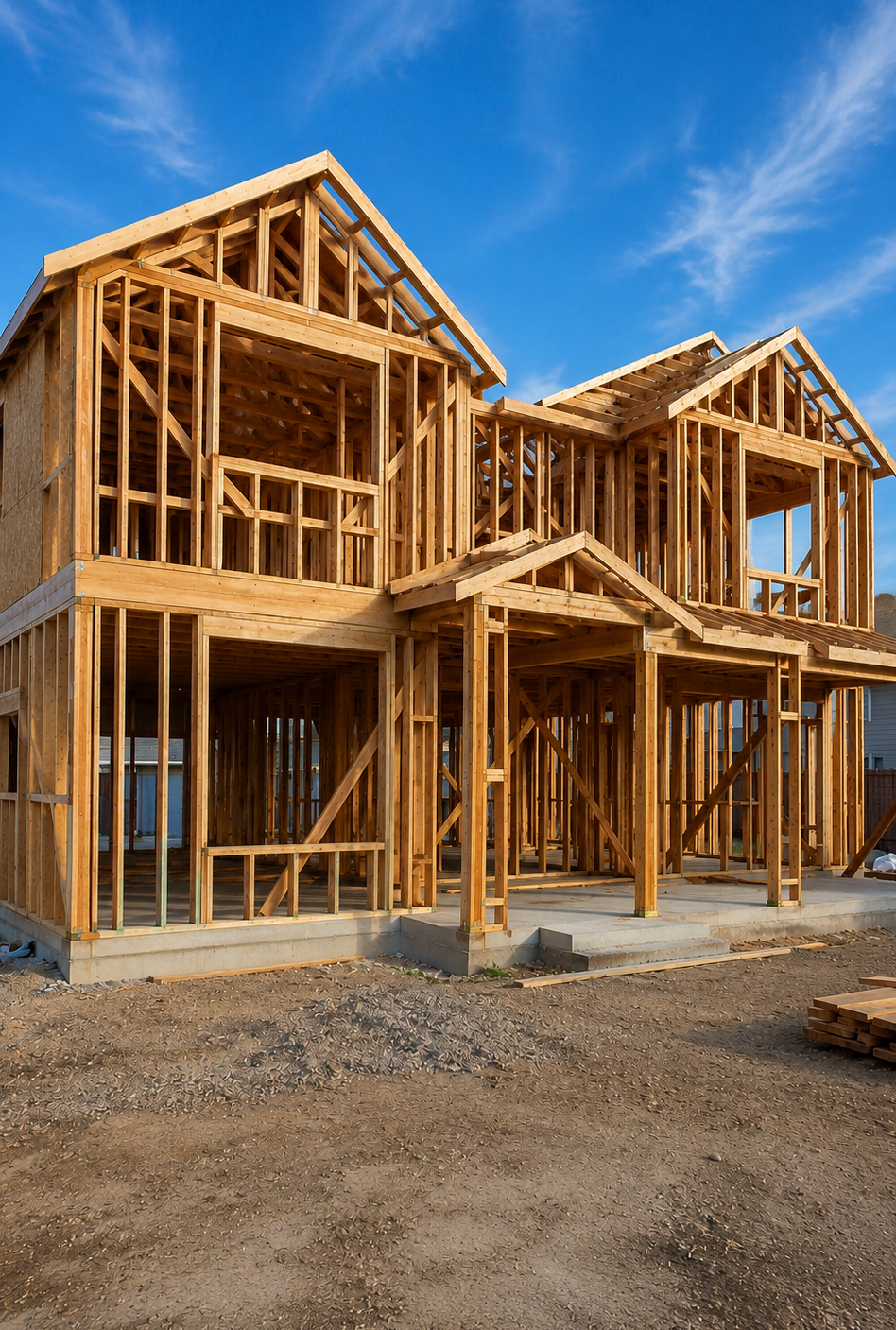
Before a single sheet of drywall goes up, before a single pipe is routed, before a single wire is pulled — there is the frame. It is the skeleton of every wall, ceiling, and opening in your home, and it determines everything that follows. RainFire Builders brings structural precision and trade coordination to every framing project across Utah.

WHAT WE FRAME
  • Interior load-bearing walls

  • Non-load-bearing partition walls

  • Steel stud commercial framing

  • Ceiling, soffit & dropped ceiling systems

  • Stair framing & landing platforms

  • Door & window rough openings

  • Structural headers & beams

  • Fire blocking & draft stopping

THE FOUNDATION OF EVERY INTERIOR

What is Interior Framing?

Interior framing is the construction of a building’s internal wall and ceiling skeleton using dimensional lumber or cold-formed steel studs. It defines every room boundary, hallway, closet, and open-plan space in a home or commercial building — and it establishes the structural support system that holds floors, roofs, and upper stories in place.

A well-framed interior is more than just walls in the right places. It is a system of carefully sized lumber, engineered openings, and precisely placed blocking that supports every trade that follows: the plumber running drain lines through top plates, the electrician pulling cable through drilled studs, the HVAC tech fitting ductwork between joists. Framing errors become everyone else’s problem — which is why getting it right from the start is non-negotiable.

RainFire Builders’ framing crews are experienced in both wood platform framing (the standard for residential construction) and cold-formed steel stud systems (used in commercial and mixed-use projects). Every wall we build is squared, plumbed, and braced before inspection — not after.

Wood Platform Framing

The standard for residential construction. Each floor “platform” is framed independently using dimensional lumber (2×4 or 2×6 studs at 16″ or 24″ on center). Versatile, cost-effective, and widely understood by every finish trade.

Steel Stud Framing

Cold-formed metal studs and tracks are used in commercial construction and high-end residential work. Dimensionally stable, mold-resistant, fire-rated, and ideal where straight walls are critical for tile or large-format finishes.

Engineered Framing Systems

LVL beams, I-joists, and engineered lumber are used for long-span structural openings and floor systems. Eliminates shrinkage and warping issues common with dimensional lumber in large-span applications.

Specialty Framing

Curved walls, arched openings, vaulted ceiling frameworks, coffered ceiling grids, and custom stair framing — complex carpentry that requires precision layout and experienced hands on every cut.

SCOPE OF WORK

OUR INTERIOR FRAMING SERVICES

From single-room remodels to full new-construction builds, RainFire Builders provides the complete range of interior framing services for residential and commercial projects across Utah.

Complete interior wall and ceiling framing for custom homes, production builds, and spec homes — coordinated from foundation stage through rough-in inspections.

Interior layout changes, room additions, basement finishes, and second-story additions — including demolition of existing walls and structural modification with beam installation.

Engineered beam placement, temporary shoring, and clean structural transitions to open up floor plans without compromising structural integrity. Always permitted and inspected.

Steel stud framing for office build-outs, retail spaces, and medical facilities — including demising walls, interior offices, and code-compliant corridor layouts.

Dropped ceilings, tray and coffered ceiling frameworks, HVAC and plumbing chase soffits, and vaulted ceiling structures — all framed plumb and level.

Interior stair stringers, landings, and platform framing for both open and closed stair designs — built to IRC tread depth and riser height requirements.

Recruitment Features
HOW WE WORK

The RAINFIRE FRAMING PROCESS

Interior framing is not a race — it is a sequence. Every step we take is deliberate and coordinated with the trades that follow, so nothing has to be redone when plumbing or electrical crews arrive.

BUILT FOR UTAH’S CONDITIONS

Framing Built for Utah’s Climate Exact to Code

Interior framing in Utah is not one-size-fits-all. The Wasatch Front sits in a seismic zone with significant earthquake risk — requiring specific hold-down hardware, shear wall design, and anchor bolt requirements that go beyond basic code minimums. RainFire Builders follows current IBC and IRC seismic provisions as standard practice on every project.

Utah’s high-altitude communities — Park City, Heber City, and the canyons — also carry significant roof snow loads that affect interior bearing wall design and header sizing. We work directly with structural engineers on projects where snow loads exceed standard plan provisions.

Our crews are familiar with the building departments across Salt Lake, Utah, Davis, Wasatch, Summit, and Tooele Counties — their inspection requirements, standard plan notes, and typical correction items. That familiarity means fewer delays and faster approvals on your project.


SEISMIC ZONE AWARE

Utah sits in one of the most seismically active areas of the western U.S. RainFire Builders incorporates shear panel, hold-down, and anchor requirements from the first layout.

SNOW LOAD COMPLIANCE

Mountain communities like Park City carry 100+ psf ground snow loads. Our framing reflects engineered structural requirements for every elevation zone we build in.

2×6 EXTERIOR STANDARD

Utah’s Climate Zone 5 energy code requires deeper wall cavities for proper insulation. We use 2×6 framing on all exterior walls as a default on new construction projects.

MULTI-COUNTY PERMIT EXPERIENCE

We pull permits and coordinate inspections across six counties — Salt Lake, Utah, Davis, Wasatch, Summit, and Tooele — with established relationships with each building department.

COMMON QUESTIONS

FRAMING FAQs

Everything you need to know about interior framing – answered honestly and in plain language.

What is the difference between framing blocking and fire blocking?2026-05-29T04:17:02+00:00

Framing blocking (also called “backing”) is solid lumber installed inside wall or ceiling cavities to provide a nailing or fastening surface for future fixtures — handrails, grab bars, TV mounts, heavy cabinetry, and towel bars are common examples. Fire blocking serves a life-safety code function: interrupting fire spread through concealed cavities. Both types should be installed during the framing phase, before walls are closed in — retrofitting either is expensive and disruptive. RainFire Builders installs both as a standard part of every framing scope.

How long does interior framing take for a typical Utah home remodel?2026-05-29T04:16:18+00:00

For a basement finish or single-floor remodel (approximately 800–1,200 sq ft of interior partitions), framing typically takes 3–7 business days. A full new-construction interior frame for a 2,500 sq ft home generally takes 1–3 weeks depending on crew size and plan complexity. RainFire Builders provides a written schedule at project kickoff so you always know what to expect — and our multi-trade coordination keeps downstream trades from sitting idle.

How much does interior framing cost in Utah?2026-05-29T04:15:41+00:00

Interior framing costs in Utah typically range from $4 to $9 per square foot for standard residential work, depending on wall height, stud spacing, structural complexity, material costs at the time of construction, and whether steel or wood framing is used. Rooms with vaulted ceilings, custom arches, structural beam work, or extensive load-bearing modifications will carry additional costs. RainFire Builders provides detailed, itemized framing estimates — you will always know exactly what each line item covers before work begins.

What is fire blocking in framing, and is it required?2026-05-29T04:14:57+00:00

Fire blocking is the installation of solid material inside wall and ceiling cavities to interrupt the path a fire would follow through concealed spaces. Utah building code (IRC R302.11) requires fire blocking at ceiling and floor lines, at every 10 vertical feet in tall walls, and at any location where pipes, wires, or other penetrations pass through framing members. It is a mandatory part of every framing inspection and is included as standard in all RainFire Builders framing projects.

Does removing a load-bearing wall require a permit in Utah?2026-05-29T04:14:19+00:00

Yes — removing or modifying a load-bearing wall in any Utah municipality requires a building permit and structural engineering review. A properly sized beam, appropriate post and column supports, and a city framing inspection are all required. This is one of the most frequently unpermitted home modifications in Utah, and it creates real liability and resale complications for homeowners. RainFire Builders handles the full permit and engineering process as part of every load-bearing wall removal project.

What is the difference between 2×4 and 2×6 wall framing?2026-05-29T04:13:51+00:00

2×4 framing (actual depth: 3.5″) is commonly used for interior partition walls where insulation is not required. 2×6 framing (actual depth: 5.5″) is required for Utah exterior walls to accommodate deeper insulation — achieving R-20 or better per Climate Zone 5 energy code. It is also used for plumbing walls where 3″ or 4″ drain lines need to be concealed. RainFire Builders uses 2×6 exterior framing as a default on all new residential construction.

How do I know if a wall in my home is load-bearing?2026-05-29T04:13:25+00:00

A load-bearing wall supports weight from above — from floors, roofs, or other walls. Key indicators: the wall runs perpendicular to floor joists, it sits directly above a beam or foundation wall below, or it runs through the center of the house. Never assume — the most reliable approach is to have a licensed contractor or structural engineer assess your specific home. RainFire Builders includes load-bearing assessments as part of every remodel framing estimate at no additional charge.

What is interior framing in home construction?2026-05-29T04:12:51+00:00

Interior framing is the process of constructing the internal wall skeleton of a building using dimensional lumber (typically 2×4 or 2×6 studs) or metal studs. It establishes the layout of every room, defines hallways, and provides the structural support for load-bearing points. Interior framing also creates the cavities where plumbing, electrical, and HVAC systems are routed before walls are closed in with drywall.

The RainFire Difference

WHY CHOOSE RAINFIRE BUILDERS FOR FRAMING?

Precision Every Time

Our crews use laser levels, construction calculators, and precision layout tools — not tape measures and estimation. Walls built plumb and straight the first time mean every finish trade that follows runs smoothly.

Trade-Coordinated Framing

Because RainFire Builders self-performs plumbing, electrical, and HVAC, our framers build with those trades in mind — pre-drilled plates, correctly spaced studs, and soffits sized to fit ductwork without surprises.

Permit & Inspection Ready

We pull permits, prepare for inspections, and know what Utah building inspectors look for. Our framing passes inspection — not because we got lucky, but because we build to code from the first stud.

Written Workmanship Warranty

RainFire Builders stands behind its framing with a written workmanship warranty. If a wall settles out of plumb due to our work, we come back and correct it — no arguments, no invoices.

CONTINUE BUILDING:

RELATED INTERIOR SERVICES

Drywall & Plaster

The natural next step after framing – hanging, taping and finishing to Level-5  |  Explore Drywall & Plaster

Insulation

Batt, blown, and spray foam systems installed into the wall cavities that your framing creates  |  Explore Insulation

Electrical

Rough-in wiring runs through the framing before walls are closed – sequence matters  |  Explore Electrical

Indoor Plumbing

Supply and drain lines are routed through framed walls during rough-in – before drywall  |  Explore Indoor Plumbing

HVAC

Ductwork chases, mechanical closets, and equipment platforms are all built into framing  |  Explore HVAC

Trim & Millwork

Coffered ceilings, built-ins, and wainscoting all begin with precision framing underneath  |  Explore Trim & Millwork


Get Your Interior Framing Done Right – The First Time

Don’t let bad framing become everyone else’s problem downstream. RainFire Builders brings precision, code knowledge, and trade-coordination experience to every interior frame we build across Utah. Let’s talk about your project today.

Call us now at (385) 336-7246 or request an estimate online. We’ll start on your property’s project and your future with care.

We Make It Happen – 

Request a Quote

Schedule your in-person consultation. Let’s get your project started

Go to Top