
Project Management – Inspections
Nothing Gets Covered
Until It Passes.
An uninspected wall is a wall with no record of code compliance — and in Utah’s Seismic Design Category D environment, that matters. RainFire Builders manages every required permit inspection from footing pre-pour through final certificate of occupancy — scheduling each inspection as a hard hold point in the production schedule, resolving every correction before work proceeds, and delivering the complete inspection record to every client at closeout.
OUR INSPECTIONS SERVICES
Building Permit Management
Footing & Foundation Inspections
Framing & Structural Inspections
MEP Rough-in Inspections
Insulation & Energy Code
Drywall Inspection
Final Trade Inspections
Certificate of Occupancy
Inspection Correction Response
Special Inspections (SDC D)
Licensed & Insured
UTAH-SPECIFIC INSPECTION REQUIREMENTS
What Makes Utah’s Inspection Environment –
Different From The National Average
Utah’s combination of seismic hazard, high-altitude combustion conditions, strict energy code requirements, and WUI fire zone designations creates an inspection environment with specific requirements that contractors from other markets — and contractors working in Utah who don’t keep up with code updates — routinely miss.
SEISMIC DESIGN CATEGORY D
Most Wasatch Front communities are in SDC D per ASCE 7-22 — the Wasatch Fault’s 2,300-year recurrence interval magnitude 7.0+ earthquake drives this classification. SDC D framing inspections verify specific shear wall edge nailing schedules (IRC R602 / SDPWS Table 4.3A), continuous hold-down strap installation, anchor bolt placement, and structural connection hardware (Simpson Strong-Tie or equivalent). Inspectors on the Wasatch Front are trained in SDC D framing requirements — contractors who specify standard SDC B or C shear wall nailing patterns will fail the framing inspection and require re-nailing.
IECC CLIMATE ZONES 5 & 6
Utah’s valley communities are IECC Climate Zone 5 (R-49 attic, R-20 wall, 5.0 ACH50 air leakage max); mountain communities are Zone 6 (same insulation requirements plus R-30 floor over unconditioned space). IECC 2021’s mandatory blower door test catches air-sealing failures that visual insulation inspection cannot — a building can have the correct R-value installed and still fail the energy code if penetrations at electrical boxes, plumbing pipes, attic hatches, and rim joists are not sealed with appropriate air barrier material. RainFire Builders air-seals all penetrations during framing before insulation installation, specifically to pass the blower door test the first time.
WUI FIRE ZONE INSPECTIONS
Foothill communities in Sandy, Draper, Cottonwood Heights, and other Wasatch Front communities designated as Wildland-Urban Interface (WUI) fire zones have additional inspection requirements under the International Wildland-Urban Interface Code (IWUIC): roofing must be Class A rated assembly (verified at roofing inspection); attic and foundation vents must be ember-resistant (1/8″ mesh maximum or listed ember-resistant products); exterior decks and structures within 10 feet of the main structure use ignition-resistant materials; and the building site must meet defensible space clearances before CO is issued. WUI inspections are performed by the building department or, in some jurisdictions, by the local fire marshal in addition to the building department’s final inspection. RainFire Builders specifies WUI-compliant materials on all projects in designated fire zones and includes WUI inspection compliance in the inspection management scope for every foothill community project.
ALTITUDE & COMBUSTION
Sandy and Salt Lake City sit at approximately 4,200–4,500 feet above sea level. At this altitude, combustion appliances — gas furnaces, water heaters, and gas ranges — experience reduced air density that affects combustion efficiency and requires altitude deration: most gas appliances rated for sea level must be derated 4% per 1,000 feet of elevation, meaning a 100,000 BTU furnace at 4,200 feet delivers approximately 83,000 BTU. Mechanical inspectors on the Wasatch Front verify altitude deration when inspecting new HVAC equipment. Mountain communities above 6,000 feet (Park City at 6,900 ft, Midway at 5,600 ft, Brian Head at 9,800 ft) have more significant altitude effects that require specific equipment selection. RainFire Builders specifies and inspects HVAC equipment at the altitude-derated capacity required for the project location.

OUR INSPECTION SERVICES
Complete inspection management from permit application through final certificate of occupancy — every hold point scheduled, every correction resolved, every document filed and delivered.
Complete permit application and submittal management for every project — building, mechanical, electrical, plumbing, and any special reviews (WUI fire zone, structural engineering, soils report). RainFire Builders prepares complete permit packages that minimize plan check cycles, knows the current processing timelines for every Utah municipality we regularly serve, responds to plan check comments, and manages resubmittals. The permit is applied for before mobilization, the inspection card is posted on-site before work begins, and the final permit is filed at project closeout. No project leaves our hands without a completed and final permit on record.
Footing and foundation pre-pour inspections are managed as hard hold points — no concrete is placed before the inspection is passed. Pre-pour checklist includes: footing dimensions verified against engineer drawings; frost depth confirmed (30–36″ minimum in Salt Lake valley, deeper at elevation); rebar size, spacing, and lap length per structural drawings; anchor bolt placement and projection for sill plate connection; and SDC D hold-down hardware location and embedment. In cold weather, cold-weather concrete curing provisions are confirmed before placement. Footing inspection failures are resolved immediately — concrete trucks do not arrive until the inspection card is signed.
Framing inspections are scheduled after all structural framing is complete — before insulation, before any concealment. The inspection verifies compliance with the approved drawings for member sizes, spans, header specifications, floor and roof framing, and stair construction. In SDC D jurisdictions (essentially all of the Wasatch Front), the framing inspection pays particular attention to shear wall nailing schedules (SDPWS Table 4.3A), continuous tie-down strap installation, anchor bolt verification, and structural connector hardware. RainFire Builders pre-inspects all shear walls internally before calling the building department inspection, using the project’s shear wall schedule to verify nailing patterns area by area.
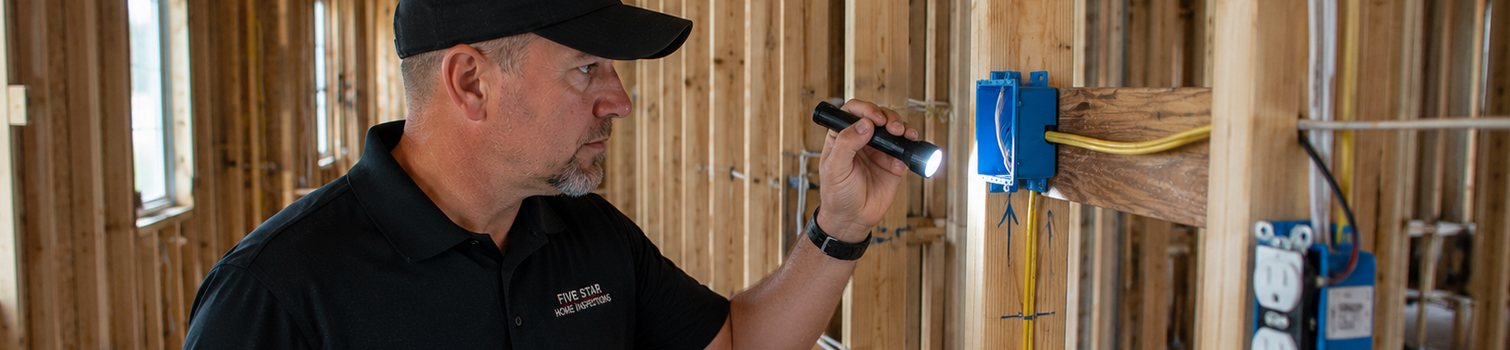
Plumbing, electrical, and mechanical (HVAC) rough-in inspections are managed as a coordinated group — all three must pass before insulation can begin. The project manager coordinates inspection scheduling to minimize the gap between the last MEP trade completing rough-in and the inspection being performed, since any inspection failure requires the failed trade to return before the others can proceed. Plumbing rough-in inspection includes a 100 PSI water pressure test (held for 15 minutes). Electrical rough-in verifies AFCI circuit locations per NEC 2020. Mechanical rough-in verifies duct sizing, sealing class, and gas pressure test. All three inspection results are documented and filed before insulation is ordered.
Insulation inspections are managed as a hard hold before drywall — no drywall may be ordered or delivered until the insulation inspection is passed. The inspection verifies R-values against IECC Chapter 4 requirements for the project’s climate zone (Zone 5 for valley projects, Zone 6 for mountain communities), complete cavity fill without voids or compression, and air sealing at all penetrations. Where a blower door test is required for IECC 2021 compliance (5.0 ACH50 maximum air leakage), the test is scheduled and performed before the insulation inspection is closed. RainFire Builders tracks IECC zone requirements for every project and performs an internal insulation check before calling the building department inspection.
The final inspection sequence — trade finals for plumbing, electrical, and mechanical followed by the building final inspection — was managed and coordinated to produce the certificate of occupancy before project closeout. The CO is the legal authorization for occupancy: no client takes possession of a new construction project managed by RainFire Builders without a CO on file. The CO is delivered to the client as part of the closeout documentation package along with all passed inspection records, trade final inspection cards, and any special inspection reports. For projects with a temporary CO (TCO) issued while minor items are resolved, RainFire Builders manages the TCO-to-CO conversion and delivers the final CO when issued.
HOW WE MANAGE INSPECTIONS
The RainFire Builders Inspection Management Process
Inspections are scheduled as hold points before mobilization — not called reactively when the next trade is waiting to start. Here is how RainFire Builders manages the full inspection lifecycle from permit to certificate of occupancy.
Inspection Planning Before Mobilization
Before the first crew mobilizes, the project manager reviews the permit type and the project scope to identify every required inspection in the sequence — including any municipality-specific inspections that are required beyond the standard IRC sequence. Inspection hold points are entered in the production schedule as non-negotiable milestones: the next phase cannot begin until the prior phase’s inspection is passed. The permit card inspection record is reviewed to confirm all required inspections are listed. For projects requiring a Special Inspection Program (SIP) under IBC Chapter 17 — typically projects with structural concrete, masonry, high-strength bolting, or structural welding in SDC C or D — the SIP is coordinated with the structural engineer before mobilization and the special inspector is identified and engaged. Inspection turnaround times for the specific municipality are built into the production schedule, not assumed to be instantaneous.
Pre-Inspection Readiness Check
Before calling any inspection, the project manager or crew supervisor performs a pre-inspection walkthrough against a phase-specific checklist — confirming that everything the inspector will look for is in place and correct before the inspector arrives. For footing inspections: frost depth, rebar layout, and anchor bolt placement are measured and verified against the structural drawings. For framing inspections: the shear wall nailing schedule is walked room by room, hold-down hardware is verified, and all connection hardware is in place. For MEP rough-in: all three trades confirm their systems are complete, pressure tests are completed and held, and any inspector-specific requirements for the local AHJ are addressed. Pre-inspection readiness reduces failed inspection frequency dramatically — most inspection failures happen when work is called before it is actually ready.
Inspection Scheduling & Hold Point Management
Inspections are called to the building department when the work is ready — not when it is convenient for the schedule. In most Utah municipalities, inspections are called by 7:00–8:00 AM for same-day or next-day scheduling. The project manager calls the inspection, records the scheduled date, and notifies the crew supervisor of the hold point. No work that would cover the inspected phase is ordered or performed until the inspection is passed. When inspections are expected to produce a correction notice (because a known code interpretation issue exists, or because the inspector at a given jurisdiction has a known preference for a specific installation detail), the project manager is on-site for the inspection to respond directly. The inspector’s presence on-site is an opportunity — a project manager who is on-site during inspections can address minor questions in real time rather than receiving a written correction notice that requires a return visit.
Correction Assessment, Resolution & Re-Inspection
When a correction notice is received, the project manager reviews every item against the applicable code section cited. Legitimate corrections are addressed immediately, and a re-inspection is called — the goal is to resolve corrections within 24–48 hours wherever physically possible, because the hold point applies to downstream work for every day the correction is open. Corrections that appear to be code misinterpretations are evaluated against the specific code language before any response — a wrongly cited correction that the contractor complies with anyway produces a result that may actually be non-compliant with the design intent, in addition to the unnecessary cost and schedule impact. Where a correction is disputed, RainFire Builders engages the AHJ’s code interpretation process — not the passive approach of just complying with whatever the inspector writes to avoid conflict.
Final Inspection, CO Issuance & Documentation Delivery
The final building inspection is called after all trade finals are passed, all punch list items are resolved, and the completed project is ready for occupancy. The project manager is present for the final inspection and addresses any final inspection items immediately. When the final inspection is passed, the CO is issued — either as a paper card, a digital certificate, or both, depending on the municipality. The CO and all passed inspection records are organized into the project closeout documentation package and delivered to the client. On projects with a Temporary Certificate of Occupancy (TCO) issued while minor items are pending completion, RainFire Builders manages the TCO conditions and the TCO-to-final-CO conversion, with the final CO delivered when issued. No project is closed out without a complete inspection record from footing to final on file for the client.

Why Inspection Management Matters More in the Wasatch Valleys
Utah’s Wasatch Fault is one of the most seismically active fault systems in the western United States, with a documented capability for magnitude 7.0+ earthquakes with approximately 2,300-year recurrence intervals. In practical terms, this means that every structure built on the Wasatch Front sits within a realistic earthquake risk environment — and the structural inspections required in SDC D (the seismic designation for most Wasatch Front communities) exist specifically to verify that the shear walls, hold-downs, and connection hardware that will resist earthquake forces are actually installed correctly. A framing inspector who finds missing hold-down hardware at the framing inspection is catching something that matters — not creating bureaucratic friction. RainFire Builders coordinates closely with both the project’s structural engineer and the building department to ensure that every SDC D framing requirement is met and verified before the wall is closed.
The IECC blower door test is a relatively new requirement (adopted in most Utah jurisdictions under IECC 2021) that catches a class of quality failure that was previously invisible to the inspection system. A building can pass visual insulation inspection with the correct R-value installed and still have 3× the allowed air leakage if penetrations — electrical boxes, plumbing pipes, recessed lights, attic hatch perimeter, rim joist — aren’t properly sealed. A 5.0 ACH50 failure requires the builder to locate and seal additional air leaks and re-test. RainFire Builders air-seals all penetrations systematically during and after framing — before insulation is installed — specifically to pass the blower door test on the first attempt. Projects that fail the blower door test face both the re-test cost and the schedule impact of drywall held until the test is passed.
Certificate of occupancy consequences are more significant in Utah than homeowners typically realize at the time of construction. Utah Code requires disclosure of unpermitted improvements in residential real estate transactions (Utah Admin. Code R162-2f-402g). Lenders processing new construction financing typically require a CO before releasing final construction loan funds. Title insurers flag open permits without final inspections as exceptions in title commitments. And the cost of retroactive compliance — after walls are finished and the building is occupied — is dramatically higher than the cost of proper inspection management during construction. RainFire Builders has never delivered a project to a client without a closed permit and a filed certificate of occupancy.
RainFire Builders obtains a certificate of occupancy on every project that requires one — and delivers it to the client in the closeout documentation package. No project is closed out with an open permit, uninspected work, or a missing CO. The inspection record is part of the permanent project documentation the client receives at closeout.
RainFire Builders has a zero-tolerance policy on covering inspected work before the inspection is passed. Inspection hold points are built into the production schedule before mobilization — not treated as afterthoughts that can be skipped when the schedule is tight. A tight schedule is not an acceptable reason to cover uninspected work in Utah’s SDC D environment.
RainFire Builders performs an internal shear wall nailing inspection against the project’s shear wall schedule before calling the building department framing inspection on every SDC D project. The internal check uses the approved engineering drawings as the verification document — inspector findings are almost never a surprise because we’ve already checked what they’re going to look for.
RainFire Builders air-seals all penetrations systematically during and after framing — before insulation installation — targeting a first-attempt blower door test result well below the 5.0 ACH50 IECC 2021 maximum. Projects that fail the blower door test hold drywall until the test is passed. We target passing on the first test, not the second.
INSPECTION FUNDAMENTALS
Inspections Are The Code’s Enforcement Mechanism. Manage Them
Building codes — the IRC, IBC, IECC, and their Utah amendments — are the rules. Building inspections are the enforcement. An inspection is a field visit by an Authority Having Jurisdiction (AHJ) representative who verifies that the actual construction conforms to the permitted drawings and the applicable codes at a specific phase of construction. The inspection system exists because building code compliance cannot be verified after walls are closed — it must be verified at the phase where the relevant work is exposed and visible.
The most consequential inspections in residential construction are the ones that happen before work is covered. The footing inspection, before concrete is placed, verifies that the foundation will be built at the right depth, width, and reinforcing — corrections are straightforward at this stage and impossible after the concrete is poured. The framing inspection, before insulation, verifies structural compliance, shear wall installation, and connection details — corrections before insulation cost hours; the same corrections after drywall cost days or weeks. The MEP rough-in inspection, before insulation and drywall, verifies all plumbing, electrical, and HVAC rough work — the most expensive correction class because MEP rough-in touches every room in the building.
On a RainFire Builders project, inspection hold points are built into the production schedule before mobilization — not called reactively when the next trade is waiting to start. The project manager knows the required inspection sequence before work begins, schedules each inspection with the appropriate lead time, and ensures the work is ready for inspection before the inspector arrives. A failed inspection is not a project failure — it is the inspection system working correctly. What is not acceptable is skipping inspections, covering work before inspections, or proceeding past a failed inspection without resolution.
Utah’s residential construction inspection environment has specific requirements that contractors from other markets sometimes underestimate. Most Wasatch Front communities are in Seismic Design Category D per ASCE 7-22 — the second-highest seismic category in the residential code — which triggers specific framing inspection requirements for shear wall construction and hold-down installation. Utah’s high-altitude climate places valley communities in IECC Climate Zone 5 and mountain communities in Zone 6, both of which have mandatory insulation R-values and air-sealing requirements verified at the insulation inspection. And WUI fire zone communities in Sandy, Draper, and Cottonwood Heights foothills have specific inspections for fire-rated roofing, ember-resistant vents, and defensible space requirements that most construction managers outside Utah don’t encounter routinely.
UTAH RESIDENTIAL INSPECTION SEQUENCE:
PERMIT ISSUED/ PLAN CHECK PASSED
The building department approves drawings. No construction may begin before the permit is posted on site. Plan check: 2–12 weeks by the municipality.
FOOTING INSPECTION – HOLD BEFORE POUR
Verify footing width, depth below frost line (30–36″ SLC valley), rebar size and spacing, and anchor bolt layout per engineer-stamped drawings.
UNDERGROUND ROUGH-IN – HOLD BEFORE BACKFILL
Plumbing and electrical underground rough-in are inspected before the slab or backfill covers the work. Slope, pipe size, and cleanout location verified. orders.
FOUNDATION / SLAB PRE-POUR INSPECTION
Poured concrete walls or slab: rebar placement, vapor barrier, fill compaction. SDC D: anchor bolt placement and hold-down hardware verified.
FRAMING INSPECTION – HOLD BEFORE INSULATION
All structural framing, shear wall nailing per IRC R602/SDPWS, hold-down installation, connection hardware, header sizes, and stair framing per approved drawings.
MEP ROUGH-IN – HOLD BEFORE INSULATION
Plumbing, electrical, and HVAC rough-in all inspected before insulation and drywall. Three separate inspections or combined, depending on jurisdiction.
INSULATION / ENERGY CODE – HOLD BEFORE DRYWALL
R-values verified against IECC Zone 5/6 requirements. Air sealing at penetrations was inspected. Blower door test (5.0 ACH50 max) may be required.
DRYWALL NAILING INSPECTION (SOME JURISDICTIONS)
Verifies drywall screw/nail pattern meets fire-resistive assembly requirements. Required in some Utah AHJs before taping; check local requirement.
FINAL TRADE INSPECTION
Plumbing final, electrical final, and mechanical (HVAC) final — separate inspections verifying that trim-out and equipment installation are complete and code-compliant.
FINAL BUILDING INSPECTION – CERTIFICATE OF OCCUPANCY
Comprehensive final inspection of the completed project. All previous inspections must be passed. CO issued — the legal authorization for occupancy.
COMMON QUESTIONS
CONSTRUCTION INSPECTIONS FAQs
The questions Utah homeowners most commonly ask about construction permits and inspections — answered honestly, including the consequences of skipping them.
A typical Utah residential new construction project requires: footing inspection (before concrete placement — verifies depth, reinforcing, anchor bolts); underground plumbing and electrical rough-in (before backfill and slab); slab pre-pour inspection; framing inspection (before insulation — verifies structural compliance, SDC D shear wall and hold-down installation per ASCE 7-22 and SDPWS); plumbing, electrical, and HVAC rough-in inspections (before insulation and drywall — three separate inspections or combined, per municipality); insulation and energy code inspection (before drywall — verifies IECC Zone 5/6 R-values and air sealing, including blower door test under IECC 2021); and final inspections for each trade plus the building final inspection that produces the certificate of occupancy. WUI fire zone projects (Sandy, Draper, Cottonwood Heights foothills) have additional inspections for roofing, vents, and defensible space.
A failed inspection produces a written correction notice identifying the code provision violated and the correction required. Work on the affected scope is prohibited until the correction is made and a re-inspection is passed. The correct process: review the correction notice against the applicable code section; make legitimate corrections promptly; contest wrongly cited corrections through the AHJ’s code interpretation process (not passively comply with anything the inspector writes); call the re-inspection after corrections are made; pass the re-inspection before any subsequent phase proceeds. Inspection failures are normal — they exist because inspectors sometimes find conditions the crew missed, and because code interpretation sometimes differs between plan review and field inspection. What is not acceptable is covering work after a failed inspection or proceeding to the next phase before the current phase is resolved. RainFire Builders resolves all corrections before any downstream work proceeds and documents every correction and resolution in the project record.
A certificate of occupancy (CO) is the building department’s confirmation that a structure has completed all required inspections, all corrections have been resolved, and the construction complies with the permitted drawings and applicable codes. It is the legal authorization for occupancy. In Utah, a CO matters because: occupancy of a new structure without a CO is legally prohibited; insurance carriers may deny claims related to structures occupied without a valid CO; Utah real estate disclosure laws require disclosure of unpermitted improvements at sale; lenders typically require a CO for new construction closing; and retroactive compliance after occupancy is significantly more expensive than proper inspection management during construction. RainFire Builders obtains a CO on every project that requires one and delivers it to the client at closeout.
No — work required to be inspected before covering may not be covered until the inspection is passed. Under IRC R109.1, covering work before inspection is a violation that can result in the building official requiring the work to be uncovered at the contractor’s expense. Covering uninspected work is a common shortcut on poorly managed projects — the next trade is ready, the inspection hasn’t been called, and the contractor proceeds anyway to keep the schedule moving. In Utah’s SDC D environment, this shortcut on framing or hold-down inspections is particularly consequential: the structural elements that resist earthquake forces may be unverified behind finished walls. RainFire Builders treats inspection hold points as non-negotiable — they are built into the production schedule before mobilization, and no work that would cover inspected scope proceeds until the inspection card is signed.
The IECC energy code inspection verifies that the building meets the energy efficiency requirements for its climate zone. Utah’s valley communities (SLC, Sandy, Murray) are IECC Climate Zone 5: R-49 attic insulation, R-20 walls (R-13 cavity + R-5 continuous), R-30 floors over unconditioned space, and maximum 5.0 ACH50 air leakage. Mountain communities (Park City, Heber) are Zone 6 with the same insulation requirements. IECC 2021 (adopted in most Utah jurisdictions) mandates a blower door test — a whole-building air leakage test that measures air changes per hour at 50 Pa (ACH50) and identifies air sealing failures that visual inspection cannot catch. The insulation inspection must be passed before drywall can begin. RainFire Builders systematically air-seals all penetrations before insulation installation, targeting a first-attempt blower door test result well below the 5.0 ACH50 maximum.
Most Wasatch Front communities are Seismic Design Category D (SDC D) per ASCE 7-22. IBC Chapter 17 requires a Special Inspection Program (SIP) for certain structural elements in SDC C+ buildings: concrete work (slump, air content, cylinder samples per ACI 318), masonry (mortar mix, grout lift height, rebar placement), structural steel welding (per AWS D1.1), high-strength bolting (installation torque verification), and anchor installation. For residential wood-frame construction, the standard building department framing inspection covers shear wall nailing, hold-down hardware, and anchor bolt placement, but the engineer of record may require structural observation visits at critical stages. RainFire Builders coordinates special inspection requirements with the structural engineer and ensures all required special inspections are scheduled, performed, and documented before those elements are concealed.
Significant and long-lasting consequences: Utah real estate disclosure law (UAC R162-2f-402g) requires sellers to disclose unpermitted construction; buyers may require remediation or price reduction; title companies flag open permits as title exceptions; lenders may deny final construction loan disbursement without a CO; insurance carriers may exclude claims related to unpermitted work; and municipalities may require demolition of unpermitted structures or prohibit occupancy until retroactive compliance is achieved. Retroactive compliance is far more expensive than original compliance — inspecting finished work typically requires opening walls, additional testing, or engineer certification of concealed construction. RainFire Builders never leaves a project without a completed permit record and a filed certificate of occupancy. The cost and time of proper inspection management during construction is a small fraction of the retroactive compliance cost after the project is complete.
Most Utah building departments offer next-day or same-day inspection scheduling for standard residential inspections, with a 7:00–8:00 AM cutoff. On-site inspection duration: 20 minutes for a single-trade rough-in on a simple project; up to 2 hours for a comprehensive framing inspection on a complex custom home. Plan check (the permit application review before permit issuance) takes longer: Sandy and suburban jurisdictions, 2–4 weeks; Salt Lake City, 4–8 weeks; high-activity jurisdictions, up to 12 weeks. Special inspections (for SDC D structural elements) are scheduled directly with the special inspector, who typically needs 24–48 hours’ advance notice. RainFire Builders builds all of these turnaround times into the production schedule — inspection hold points are scheduled events, not afterthoughts called when the next trade is already waiting.
The RainFire Standard
WHY CHOOSE RAINFIRE BUILDERS FOR A FULLY INSPECTED PROJECT?
Nothing Covered Before It Passes
Inspection hold points are non-negotiable — built into the production schedule before mobilization, not negotiated when the schedule is tight. In Utah’s SDC D environment, covering uninspected structural work isn’t a shortcut. It’s a liability that will outlast the project.
Full Inspection Record at Closeout
Every passed inspection card is filed and delivered to the client in the closeout documentation package — from footing inspection through the final certificate of occupancy. The inspection record is the proof that the work was done correctly and verified. Clients receive it as a standard part of project closeout.
SDC D Pre-Inspection Standard
An internal shear wall nailing inspection against the structural drawings is performed before the building department framing inspection on every SDC D project. We check what the inspector is going to check before they arrive — so corrections are rarely needed and schedules are rarely held by re-inspections.
CO on Every Project
RainFire Builders has never delivered a project to a client without a closed permit and a filed certificate of occupancy. The CO is the legal authorization for occupancy and the protection from disclosure liability at resale. It is not optional on our projects — for any project, at any size.
CONTINUE THE PROCESS:
RELATED PROJECT MANAGEMENT SERVICES
Scheduling
Inspection hold points are built into the production schedule before mobilization – not called reactively when the next trade is waiting. The production schedule and the inspection sequence are the same document on a RainFire Builders project | Explore More About Scheduling
Estimates
Permit fees are itemized separately in every RainFire Builders estimate – by permit type and municipality. In Utah, permit fees vary significantly between jurisdictions and must be calculated using the specific municipality’s fee schedule, not a national average. | Explore Estimates
Change Orders
Code-required changes identified during plan check or field inspection are among the most common triggers for change orders on Utah projects. Every code-required scope addition is documented as a written change order with the code section cited before work proceeds. | Explore Change Orders
Quality Assurance
The building department’s inspections are the minimum verification standard – not the ceiling. RainFire Builders’ internal phase sign-off process adds a project manager review at each major milestone before the inspector arrives, catching quality issues while they are still inexpensive to fix. | Explore Quality Assurance
Start Your Project
Ready to work with a contractor who manages every required inspection, deliverys a certificate of occupancy, and hands you a complete inspection record at closeout? Contact ReainFire Builders to start the conversation. | Get Your Free Estimate
All Project Management
Return to the complete project management overview – estimates, scheduling, job costing, change orders, inspections, and quality assurance. | Go Back to the Beginning
Every Inspection. Every Pass. Every CO. Every Project.
Build It Right. Pass It Right. Own the Record.
A construction project without a complete inspection record is a construction project with an undisclosed liability — at resale, at insurance claim time, and at any future renovation that opens the walls. RainFire Builders manages every required inspection from footing pre-pour through final certificate of occupancy — scheduling every hold point before mobilization, performing internal pre-inspections before calling the building department, and delivering the complete inspection record to every client at closeout. No open permits. No covered uninspected work. No missing certificates of occupancy. Not on any project we manage.
Call us now at (385) 336-7246 or request an estimate online. We’ll start on your property’s project and your future with care.
We Make It Happen –
Request an Estimate
Schedule your in-person consultation. Let’s get your project started
