Quality Assurance2026-06-08T07:56:57+00:00

Exterior Construction – Quality Assurance

Find It While The 
Wall Is Still Open

The industry norm is to find quality problems at the punch list — after the wall is painted, after the tile is set, after the cabinet is hung. Correction at that point costs 10–20× what the same correction would have cost before the drywall went up. RainFire Builders’ QA program operates at the phase where problems are cheapest to fix: before each trade hands off to the next, while everything that needs to be right is still visible and accessible.

REQUEST A QUALITY-MANAGED PROJECT

SEE THE QA SYSTEM

OUR QUALITY ASSURANCE SERVICES

  • Phase Sign-Off System

  • Pre-Drywall Inspections

  • Trade Workmanship Checklist

  • Material & Specification Verification

  • Specification Compliance

  • Punch List Management

  • Photo Documentation

  • Workmanship Standards

  • Subcontractor QA Management

  • Warranty Inspection Program

100%

Licensed & Insured

7+

Counties Served

15+

Years in Utah

500+

Projects Delivered

QUALITY ASSURANCE FUNDAMENTALS

Quality is Specified Before Work Starts –
And Verified Before Work is Covered

Construction quality assurance is the systematic process of ensuring work meets specified standards — at the point where verification is possible, and correction is still practical. It has two distinct but equally important dimensions: the specification dimension (using the correct materials and methods for the project’s specific conditions) and the execution dimension (verifying that the specified materials and methods are actually installed correctly before the work is concealed).

Specification-level QA is the more economical of the two because incorrect specifications are free to correct before work begins. Specifying 3,000 PSI non-air-entrained concrete for a Utah driveway — when 4,000 PSI air-entrained concrete is required for Utah’s 100+ annual freeze-thaw cycles — costs nothing to change before the concrete truck arrives. After the concrete is placed and the surface begins scaling at year six, the correction costs a full replacement. Specifying the wrong IECC insulation R-value, the wrong seismic shear wall nailing schedule, or the wrong window U-factor has the same pattern: free to correct at the specification stage, expensive to correct after installation. RainFire Builders applies specification-level QA at the estimate stage — the specification is a quality document as much as it is a cost document.

Execution-level QA operates at three levels on a RainFire Builders project. Level one is trade supervisor self-inspection at phase completion — each crew supervisor verifies that their own work meets the project’s quality standard before handing off to the next trade. Level two is a project manager milestone review at six defined checkpoints (foundation, framing, MEP rough-in, insulation, drywall, finishes) with a signed phase sign-off checklist completed and filed. Level three is the client pre-occupancy punch list — the systematic joint walkthrough conducted before closeout, with all items resolved before final payment is processed.

The economic logic of this three-level system is the cost-of-quality curve: defects found and corrected at the phase where they were created cost the least; defects found at the subsequent phase cost more; defects found at punch list cost far more; and defects found after occupancy cost the most and damage the client relationship most severely. An effective QA program invests in early detection that prevents later costs. A framing deficiency found during framing inspection costs hours. The same deficiency was found after drywall costs days. Found after paint: weeks. Found after the client moves in: the relationship.

Final Check · Level 3

CLIENT PUNCH LIST

Joint pre-occupancy walkthrough with client and project manager. All items documented in writing and resolved before final payment. On a project with a functioning Level 1 and 2 system, the punch list is short — most quality issues were caught and corrected at the phase where they cost the least.

Second Line Level 2

PROJECT MANAGER MILESTONE REVIEWS

Six defined PM review checkpoints: foundation, framing, MEP rough-in, insulation, drywall, finishes. Signed phase sign-off checklist completed at each. Pre-drywall inspection covers blocking, backing, fire blocking, MEP completeness, and insulation before any drywall is ordered.

First Line Level 1

TRADE SUPERVISOR SELF-INSPECTION

Each crew supervisor verifies their own work meets the project’s quality standard before handing off. Signed trade completion checklist filed for every phase. Problems caught at the lowest possible cost — by the people who know the work best.

Foundation Level 0

SPECIFICATION-LEVEL QA

Correct mix design, IECC climate zone, seismic reinforcing, WUI material specs — applied at the estimate stage. Free to correct before work begins. Prevents entire categories of failures before any crew arrives.

OUR SCOPE OF SERVICE

OUR QUALITY ASSURANCE SERVICES

Every element of RainFire Builders’ quality assurance program — from specification-level QA at the estimate through the warranty inspection at 11 months — is applied on every project as a non-optional component of project management.
Recruitment Executive Search

A formal phase sign-off checklist is completed and filed at each trade handoff on every project — the signed document confirming that the previous trade’s work is complete, correct, and ready for the next trade to begin. Phase sign-off operates at two levels: trade supervisor self-inspection using a trade-specific checklist, followed by project manager confirmation before the next trade begins work. The signed checklists are filed in the project record — creating an accountability trail that shows who verified what at which phase. No next trade begins without the prior phase’s sign-off on file.

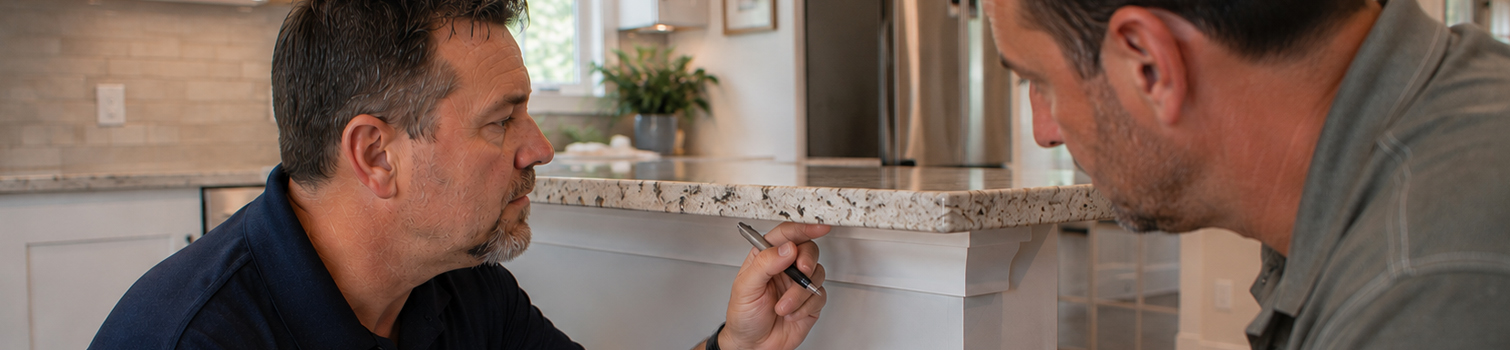
A comprehensive project manager inspection of all in-wall and in-ceiling work before any drywall is ordered — the single most economically important QA event on a residential construction project. The pre-drywall inspection covers framing completeness (blocking, backing, fire blocking, plumb and square), MEP rough-in completeness and location correctness (with all pressure tests confirmed passed), insulation installation quality (R-value, full cavity fill, air sealing at all penetrations), and any other in-wall work specified for the project. The pre-drywall inspection sign-off is the authorization that triggers the drywall order. Photographic documentation of all in-wall work is captured and filed at this inspection.

Recruitment Executive Search

Explicitly stated workmanship standards applied to each trade scope on every project — not implied from industry custom, but stated in the project scope of work and verified at phase sign-off. Key references: NAHB Residential Construction Performance Guidelines (framing, drywall, flooring, concrete); ACI 117 for concrete flatness tolerances (3/8″ maximum gap under a 10-foot straightedge); ASTM C840 / Gypsum Association GA-216 for Level 4 drywall finish (standard for painted walls) or Level 5 (required for flat/matte paint and critical lighting); NWFA Installation Guidelines for wood flooring; TCNA Handbook for tile installation; and AWI Quality Standards for millwork (Premium, Custom, or Economy, as specified per project type).

Before installation, specified materials are verified against the approved scope of work — confirming that the product being installed is the product that was specified and priced. Material substitution — where a product other than the estimated specification is used without client knowledge — is one of the most common quality shortcuts in residential construction. RainFire Builders verifies product model numbers, specifications, and performance ratings against the scope of work before installation. For critical performance items (concrete mix design, window U-factor, insulation R-value, roofing assembly), material verification is documented with delivery tickets, supplier invoices, or product data sheets filed in the project record.

Recruitment Executive Search

A formal joint punch list walkthrough with the client and project manager before project closeout — with all items documented in writing, assigned to the responsible trade, given a resolution date, and verified complete before final payment is requested. On a project with a functioning phase sign-off system, the punch list is a short list of minor finish items — not a catalog of work that should have been caught months earlier. The punch list sign-off — confirming all items are resolved — is required before the final payment request. The completed punch list document is included in the closeout documentation package, creating a written record that the project was completed to the client’s and contractor’s mutual satisfaction.

Systematic photographic documentation throughout every project — capturing the condition of work at each major phase milestone, particularly work that will be concealed as construction progresses. Pre-pour reinforcing, framing connections, shear wall nailing, MEP rough-in before insulation, insulation before drywall, and in-wall conditions at the pre-drywall inspection are all photographed and filed. The photographic record is organized by phase and date, cross-referenced to the project location, and delivered to the client at closeout as part of the permanent project documentation. Post-occupancy warranty diagnoses that would be impossible without the in-wall photo record are routine on RainFire Builders projects — because the record exists.

HOW OUR QA SYSTEM WORKS

The RainFire Builders Quality Assurance Process

Quality assurance operates from the estimate stage through the warranty period — not just at the punch list. Here is how the QA program flows through the complete project lifecycle.

About Avada Recruitment
QA in Utah’s Specific Environment

Why Utah Construction Demands Specification-Level Quality Assurance

The most expensive QA failures in Utah residential construction are specification failures — using the wrong material or method for Utah’s specific conditions. A driveway poured with 3,000 PSI non-air-entrained concrete because the contractor used a national-average spec will look indistinguishable from a correctly specified 4,000 PSI air-entrained driveway for the first 3–4 years. By year 7, the surface will be scaling and spalling — and the repair is a full replacement. The specification failure cost the homeowner nothing at the time of construction and $15,000–$25,000 a decade later. Specification-level QA is the intervention that catches this class of failure before it is built.

Utah’s IECC blower door requirement has created a new category of quality failure: buildings that pass visual insulation inspection but fail air leakage testing because penetrations weren’t sealed. A building with R-49 attic insulation, R-20 wall insulation, and an air leakage test result of 8.5 ACH50 (nearly double the 5.0 ACH50 maximum) has correct material specifications and an incorrect installation — the insulation is right, but the air sealing is wrong. This class of failure is invisible to visual inspection and is only caught by the blower door test. RainFire Builders performs air sealing systematically during the framing phase — before insulation is installed — and tracks the result at the pre-insulation stage to identify and seal any remaining leakage paths before drywall makes access difficult.

Utah’s moisture cycling — dry summers, snowy winters, spring snowmelt — produces wood framing that cycles through a wider range of moisture content than most U.S. markets. New framing installed at 19% moisture content (the maximum for green lumber) will shrink to 7–9% equilibrium moisture content over the first year of occupancy, producing drywall cracks at butt joints, nail pops, and door and window adjustment needs that are normal consequences of this moisture cycling, not construction defects. RainFire Builders explains this process to clients at project closeout, includes a first-year settlement inspection as part of the warranty program, and addresses all moisture-related drywall and finish adjustments under warranty during the first year of occupancy.

Spec-Level QA at Every Estimate

Every RainFire Builders estimate includes specification review for Utah-specific conditions: concrete mix design for freeze-thaw exposure, IECC climate zone insulation R-values for the project’s specific elevation, SDC D seismic reinforcing for Wasatch Front locations, and WUI material specs for foothill communities. The specification is a quality document, and it is reviewed for Utah correctness before the first bid is priced.

Pre-Drywall Photo Record — Standard

Every in-wall pipe, wire, duct, and structural connection is photographed at the pre-drywall inspection on every project — before drywall is ordered. The photo record is organized by room and wall, cross-referenced to the project drawings, and delivered to the client at closeout. Post-occupancy warranty diagnoses that are impossible without the in-wall photo record are routine with it.

Blower Door First-Pass Standard

RainFire Builders targets a first-attempt blower door test result below 5.0 ACH50 (IECC 2021 Zone 5 maximum) by air-sealing all penetrations systematically before insulation installation. The blower door test is a QA check on air sealing quality that visual inspection cannot replicate — and failing it holds the drywall schedule while the leaks are located and sealed. We prevent the failure rather than respond to it.

11-Month Warranty Inspection

RainFire Builders schedules a warranty inspection at 11 months after substantial completion — before the written workmanship warranty expires — specifically to address Utah moisture-cycling effects (first-year drywall settlement, door adjustments, caulk joint maintenance) under warranty before they become post-warranty client expenses. The warranty inspection is a standard part of every project closeout commitment.

THE MOST VALUABLE QA EVENT

The Pre-Drywall Inspection: The Last Time the Wall is Open

The pre-drywall inspection is the most economically significant quality assurance event in residential construction. It is the last opportunity to inspect every element that will be hidden behind the finished wall and ceiling surfaces — framing, blocking, backing, MEP rough-in, insulation, and fire blocking — while correction is still relatively inexpensive.

On a project without a formal pre-drywall inspection, the drywall crew installs drywall and the next thing anyone sees of what’s behind the wall is when a problem reveals itself — a wall-mounted TV with no blocking behind the drywall, a bathroom grab bar with no backing to attach to, a dripping pipe that soaks the adjacent framing before anyone knows it’s leaking, a missing fire block that shows up as an inspection failure. Each of these is far more expensive to correct after drywall than before.

On a RainFire Builders project, the pre-drywall inspection is a formal, checklist-driven walkthrough conducted by the project manager — verifying completeness and correctness of every in-wall item before drywall is ordered. The pre-drywall inspection sign-off is the authorization that triggers the drywall order: no drywall is ordered before the pre-drywall inspection checklist is signed.

The pre-drywall inspection also produces the most valuable photographic record on any construction project. Photographs taken during the pre-drywall inspection document the location of every pipe, wire, and duct behind every wall — a record that is invaluable if a leak, electrical fault, or MEP access issue arises years after construction. Many of the most expensive post-occupancy warranty repairs are difficult or impossible to diagnose without knowing what’s inside the wall at the specific location of the problem. The pre-drywall inspection photographs eliminate that uncertainty.


FRAMING COMPLETENESS

✓ – All blocking and backing installed at specified locations (TV, towel bars, grab bars, medicine cabinets, heavy fixtures)
✓ – Fire blocking at penetrations through top/bottom plates per IRC R302.11 and at horizontal blocking in tall stud spaces
✓ – Framing plumb and square within NAHB tolerance (3/8″ in 32″ for walls; 1/4″ in 10 ft for floors)
✓ – Cabinet nailer/drywall backing installed at upper and lower cabinet locations per kitchen plan

PLUMBING ROUGH-IN

✓ – All supply and DWV pipes at correct locations per plumbing plan, capped and pressure tested (100 PSI 15 min)
✓ – Pipe penetrations through framing protected with nail plates per IRC P2603.2 where within 1.5″ of face
✓ – Shower and tub rough-in at correct height and location; drain set at correct elevation
✓ – Vent stack penetrations through top plates are properly sealed for the air barrier

ELECTRICAL ROUGH-IN

✓ – All wires pulled, labeled, and coiled at each box; boxes at correct heights and locations per electrical plan
✓ – Wire penetrations through framing protected with nail plates where within 1.5″ of face (NEC 300.4)
✓ – AFCI circuit wires identified at panel location; smoke and CO detector wiring at specified locations
✓ – EV charger circuit (NEC 2020) wired to garage panel; low-voltage rough-in complete

HVAC ROUGH-IN

✓ – All duct runs complete, supported at code spacing, and sealed at joints with mastic or listed tape (not plain duct tape)
✓ – Supply and return register locations correct; duct sizing per Manual D calculation
✓ – Gas piping pressure tested (10 PSI for 15 min per IMC); combustion air routing complete
✓ – Bath exhaust fans ducted to exterior (not to attic); dryer duct roughed in at correct location

INSULATION & AIR SEALING

✓ –  Cavity insulation at correct R-value (IECC Zone 5: R-20 wall, or R-13 + R-5 continuous); full cavity fill without voids
✓ – All penetrations sealed with fire-rated caulk or foam: electrical boxes, plumbing pipes, duct sleeves, top/bottom plates
✓ – Rim joist insulation and air sealing complete (one of the largest air leakage sources in Utah residential construction)
✓ – Sound attenuation insulation installed in acoustically sensitive walls (between bedroom and bathroom, etc.) per spec

COMMON QUESTIONS

CONSTRUCTION QUALITY ASSURANCE FAQs

Honest answers to the questions homeowners should ask about how their contractor plans to ensure quality — before the wall closes and the opportunity is gone.

What is construction quality assurance?2026-06-08T07:29:31+00:00

Construction quality assurance (QA) is the systematic process of verifying that construction work meets specified standards at the phase where verification is possible and correction is still practical. It operates at two levels: specification QA (using the correct materials and methods for the project’s specific conditions — the cheapest form of QA because specification errors are free to correct before work begins) and execution QA (verifying that specified materials and methods are actually installed correctly before the work is concealed — much cheaper than post-occupancy correction). An effective QA program has three tiers: specification-level QA at the estimate stage; phase-level QA at each trade handoff while the wall is open; and punch list QA at project completion. The economic rationale is the cost-of-quality curve: defects caught at their phase of origin cost the least; defects that survive to the punch list cost 10–20× more; defects discovered after occupancy cost even more and damage the client relationship permanently.

What is a pre-drywall inspection and why does it matter?2026-06-08T07:30:37+00:00

A pre-drywall inspection is a systematic review of all in-wall and in-ceiling work before drywall is installed — the last opportunity to verify framing completeness (blocking, backing, fire blocking), MEP rough-in (pipe and wire locations, pressure tests), insulation (R-value, full cavity fill, air sealing), and any other work that will be concealed. It is the most economically significant QA event on a residential construction project because problems found before drywall cost hours to correct; the same problems found after drywall cost days or weeks. A missing blocking location for a wall-mounted TV costs $80 to add before drywall; it costs $600–$1,200 after drywall is painted and the TV is mounted. RainFire Builders conducts a formal project manager pre-drywall inspection on every project, with a signed checklist and photographic documentation of all in-wall work before any drywall is ordered.

What is a construction punch list and when should it be completed?2026-06-08T07:31:30+00:00

A punch list is a written inventory of items requiring correction, completion, or adjustment before the project is fully complete — minor paint touch-ups, hardware adjustments, door tuning, caulk gaps, tile repairs, HVAC balancing. The punch list is developed in a joint walkthrough with the client and project manager after substantial completion. On a project with a functioning phase sign-off system, the punch list is short because quality issues were caught at each phase. It should be completed before the final payment is requested — not after. Punch list items should never be used as leverage to withhold payment on a substantially complete project, but they should also never be ignored after final payment. RainFire Builders completes all punch list items before the final payment request and documents resolution in writing before project closeout.

How does phase sign-off prevent expensive rework?2026-06-08T07:32:38+00:00

Phase sign-off is the formal verification that each phase of construction meets quality standards before the next trade begins work that would cover or be affected by the previous phase. The economic rationale: a framing deficiency corrected during framing costs hours and a small amount of lumber. The same deficiency corrected after drywall requires drywall removal, framing correction, drywall replacement, taping, texturing, and painting — multiplying the cost by 8–15×. After paint: add repainting. After occupancy: the full correction cost plus client relationship damage. Phase sign-off produces signed checklists confirming prior phase quality before the next trade begins — making the sign-off party accountable for their work’s condition at handoff and ensuring problems are caught at the cheapest possible correction point rather than accumulated to the punch list.

What workmanship standards apply to Utah residential construction?2026-06-08T07:33:29+00:00

Key residential workmanship references: NAHB Residential Construction Performance Guidelines (most widely referenced standard, covering tolerances for framing, drywall, flooring, concrete, and painting); ACI 117 for concrete flatness tolerances (3/8″ maximum gap under a 10-foot straightedge); ASTM C840 and Gypsum Association GA-216 for drywall installation — Level 4 finish is the standard for painted surfaces with eggshell or satin paint; Level 5 finish (skim coat or extra drywall compound application) is required for flat or matte paint and critical lighting conditions; NWFA Installation Guidelines for wood flooring; TCNA Handbook for tile installation; and AWI Quality Standards (Premium, Custom, or Economy) for architectural millwork. RainFire Builders specifies the applicable workmanship standard for each trade scope on each project and applies that standard at phase sign-off and final punch list.

What is photographic documentation in construction?2026-06-08T07:34:10+00:00

Photographic documentation in construction QA is the systematic capture of photographic evidence at each major phase milestone — particularly work that will be concealed as construction progresses. The record documents: foundation reinforcing before concrete; framing connections, shear wall nailing, and blocking; MEP rough-in locations before insulation; insulation installation before drywall; and in-wall conditions at the pre-drywall inspection. The photographic record serves multiple purposes: QA reference during construction; evidence of code compliance for covered work; diagnostic tool for post-occupancy warranty issues (knowing what’s inside a wall before it was closed is invaluable when a leak appears three years later); and change order documentation for field condition discoveries. RainFire Builders delivers the organized photographic record to the client at closeout as part of the permanent project documentation.

What is specification-level quality assurance?2026-06-08T07:34:51+00:00

Specification-level QA is the practice of preventing entire categories of quality failures by specifying the correct materials and methods at the estimate and design stage — before any work begins. Examples in Utah: specifying 4,000 PSI air-entrained concrete (rather than 3,000 PSI) for exterior applications eliminates freeze-thaw scaling failures that develop in years 5–10; specifying IECC Zone 5 insulation R-values (R-49 attic, R-20 wall) ensures code compliance before insulation is installed; specifying SDC D shear wall nailing schedules ensures seismic resistance before framing is covered. Specification errors are free to correct before work begins and extremely expensive to correct after installation. Specification-level QA is the most economical form of quality management — the cost of reviewing and correcting a specification before work is zero; the cost of replacing incorrectly specified work after installation can be 100× higher.

What is a warranty inspection?2026-06-08T07:35:34+00:00

A warranty inspection is a systematic review of a completed project during the warranty period — typically at 11 months, before the standard 1-year workmanship warranty expires. It identifies defects or performance issues that have emerged since the punch list: settling drywall cracks at structural connections as framing acclimates to moisture cycling (normal in Utah’s dry climate); door and window adjustments needed as wood framing reaches equilibrium moisture content; caulk joint failures at exterior penetrations subject to Utah’s freeze-thaw and UV cycling; HVAC performance issues that manifest under full seasonal load. Warranty inspection items identified before expiration are corrected under warranty — benefiting the client who gets covered repairs and the contractor who addresses issues before they become larger problems. RainFire Builders schedules warranty inspections at approximately 11 months on every project covered by a written workmanship warranty.

The RainFire Standard

WHY CHOOSE RAINFIRE BUILDERS FOR QUALITY-MANAGED CONSTRUCTION?

Phase Sign-Off Before Every Handoff

No trade begins work until the prior phase’s sign-off checklist is signed and filed. Problems are found at the phase where they cost the least to fix — while the wall is open — not accumulated to the punch list where correction costs 10–20× more.

Pre-Drywall — Every Project

A formal pre-drywall inspection by the project manager — with a signed checklist and photographic documentation — before any drywall is ordered on every project. The pre-drywall inspection sign-off is the authorization that triggers the drywall delivery. It is not optional and it is not bypassed when the schedule is tight.

Spec-Level QA at the Estimate

Correct Utah specifications for concrete, insulation, seismic, and energy codes are applied at the estimate stage — before any pricing or contracting. Specification failures are free to prevent before work begins and catastrophically expensive to correct after installation. We prevent them.

Photo Record Delivered at Closeout

Every in-wall pipe, wire, duct, and structural connection is photographed at the pre-drywall inspection and delivered to the client as part of the project record at closeout. The photo record is the diagnostic tool that makes post-occupancy warranty response fast, accurate, and non-invasive.

CLICK HERE to see the rest of the PROJECT MANAGEMENT

CONTINUE THE PROCESS:

RELATED PROJECT MANAGEMENT SERVICES

Scheduling

Phase sign-off checkpoints are built into the production schedule before mobilization – not inserted reactively when problems appear. The schedule and the QA system are the same document on a RainFire Builders project phase completion gates quality before the next trade begins. |  Explore More About Scheduling

Inspections

Building department inspections and construction QA inspections serve complementary roles. QA catches what the building department won’t assess; the building department provides independent code compliance verification. Both are required on every permitted project.  |  Explore Inspections

Change Orders

Material substitutions – where a cheaper product is used in place of the specified one without client knowledge – are documented as change orders if they change the specification. QA and change order management work together to ensure the client receives what they approved.  |  Explore Change Orders

Estimates

Specification-level QA begins at the estimate – the correct Utah mix design, IECC R-values, and SDC D specifications are part of the estimate scope document. The specification is a quality document as much as it is a cost document. Getting it right before pricing prevents the most expensive class of QA failures.  |  Explore Estimates

Start Your Project

Ready to see what a property-prepared construction estimate looks like? Contact RainFire Builders for a free site visit and written line-item estimate on your Utah construction project.  |  Get Your Free Estimate

All Project Management

Return to the complete project management overview – estimates, scheduling, job costing, change orders, inspections, and quality assurance.  |  Go Back to the Beginning


Phase Sign-off. Pre-Drywall Inspection. Photo Record. Every Project.

Quality Caught While It’s Still Cheap to Fix.

Most construction quality programs are punch lists — a list of problems discovered after everything is finished, when correction is expensive, disruptive, and damaging to the relationship. RainFire Builders’ QA program operates at the phase where problems cost the least to fix: before each trade hands off to the next, while the wall is still open and the crew is still on-site. Phase sign-off checklists are filed at every handoff. Pre-drywall inspection before any drywall is ordered. Photographic documentation of every in-wall element. Specification review at the estimate stage for Utah’s specific concrete, insulation, seismic, and energy code requirements. The quality difference that makes a project feel right years after completion starts with the decisions made before the first board goes up.

Call us now at (385) 336-7246 or request an estimate online. We’ll start on your property’s project and your future with care.

We Make It Happen – 

Request an Estimate

Schedule your in-person consultation. Let’s get your project started

Go to Top