Windows and Doors2026-06-05T22:39:13+00:00

Exterior Construction – Windows & Doors

Where Energy Escapes & 
Weather Gets In

Windows and doors are the highest-consequence penetrations in the building envelope — responsible for the majority of air infiltration, conductive heat loss in winter, and moisture intrusion failures in most Utah homes. In a state with 300+ days of sun, Class 4 hail events most summers, IECC Climate Zone 5 and 6 performance requirements, and large diurnal temperature swings that stress every frame material, the product selection and installation quality decisions you make today drive comfort, energy costs, and moisture risk for the next 20–30 years.

GET A FREE ASSESSMENT

EXPLORE OUR SERVICES

OUR WINDOWS & DOORS SERVICES

  • Replacement Windows

  • New Construction Window Install

  • Entry & Exterior Door Installation

  • Patio & Siding Door Systems

  • French & Hinged Patio Doors

  • Egress Window Installation

  • Window Flashing & Air Sealing

  • Skylights & Roof Windows

  • Storm Windows & Security Doors

  • Commercial Windows & Storefronts

100%

Licensed & Insured

7+

Counties Served

15+

Years in Utah

500+

Projects Delivered

UTAH-SPECIFIC CONDITIONS

Six Reasons Utah’s Climate –
Makes Window Selection Harder Than Average

Most window manufacturers test and market products to national average conditions. Utah’s combination of high altitude, large temperature swings, hard water, hail exposure, intense sun, and strict IECC performance requirements creates a specification environment where national average guidance doesn’t always apply.

IECC Climate Zones 5 and 6 are the relevant performance standards for Utah residential construction. A standard vinyl window comfortably meeting Zone 5’s U-factor 0.30 maximum may fall short of Zone 6’s 0.27 requirement for mountain communities. Getting this right is a specification decision made before the window is ordered — not fixable after installation.

Utah’s altitude raises UV intensity meaningfully. At 4,200 feet at the SLC valley floor, UV radiation is approximately 25% more intense than at sea-level locations at the same latitude. Mountain communities above 6,000 feet see even higher UV loads. This accelerates vinyl frame chalking and brittleness, edge seal degradation in insulated glass units not formulated for high-UV environments, and color fading in dark frame colors. Titanium dioxide UV stabilization in vinyl and ASTM E2837-rated IGU edge seals are the right specifications for Utah installations.

Hard water at 200–400 ppm throughout the Wasatch Front deposits calcium and magnesium scale in window sill pan drainage channels, clogging the weep holes that drain water to the exterior. A clogged weep hole converts the sill pan drainage system from working as designed into a water retention basin that directs infiltration into the wall cavity. Annual weep hole inspection is Utah-specific maintenance that most window manufacturers don’t mention, and most homeowners never do.

IECC CLIMATE ZONES 5 & 6

Valley communities (SLC, Sandy, Provo, Ogden): Zone 5 — U-factor ≤ 0.30, SHGC ≤ 0.40. Mountain communities above ~5,500 ft (Park City, Heber, Midway): Zone 6 — U-factor ≤ 0.27. Some Utah municipalities have adopted stricter local amendments — verify before ordering. RainFire Builders verifies compliance for the specific project address before the product is specified.

CLASS 4 HAIL CORRIDOR – WASATCH FRONT

Salt Lake, Utah, and Davis Counties experience significant large-hail events most summers. Class 4 impact-resistant windows (FM 4473 / UL 2600 rated — withstanding a 2-inch diameter steel ball impact) are available and may qualify for insurance premium discounts from carriers that recognize them. RainFire Builders advises on Class 4 availability in each frame material and whether your specific carrier offers recognition.

HIGH-ALTITUDE UV – -25% ABOVE SEA LEVEL

SLC at 4,200 feet receives ~25% more UV than sea level at the same latitude. Mountain communities above 7,000 ft receive significantly more. Drives vinyl frame chalking and corner brittleness, IGU edge seal degradation, and exterior finish fading — particularly in dark frame colors. Specify TiO₂-stabilized vinyl and ASTM E2837-rated edge seals.

40°F+ DIURNAL SWINGS – FRAME STRESS

Utah spring and fall diurnal temperature ranges frequently exceed 40°F daily. Annual frame surface temperatures range from -10°F to 130°F in direct sun. Vinyl frames expand and contract approximately 5–6× more than glass across this range. Multi-chamber profiles (3+ chambers) with reinforced corner welds accommodate the movement; single-chamber profiles develop corner joint separation within 10–15 years.

HARD WATER – 200 TO 400 PPM

Wasatch Front municipal water runs at 200–400 ppm hardness (vs. ~60 ppm soft water standard). Calcium and magnesium deposits accumulate in sill pan drainage channels and weep holes. Clogged weep holes turn the sill pan into a water retention basin, directing infiltration into the wall cavity. Annual weep hole inspection and cleaning are recommended, especially on west-facing windows.

AIR INFILTRATION – PRIMARY ENERGY LOSS

Window and door rough openings are the primary source of air infiltration in most Utah homes — contributing more to heating and cooling loads than glazing conduction. IECC Section R402.4 requires air sealing at all penetrations, tested by blower door (≤3.0 ACH50) in new construction. Proper rough opening sealing — low-expansion foam interior, backer rod and sealant exterior — is the first determinant of installed window performance.

OUR SCOPE OF WORK

OUR WINDOW &
DOOR SERVICES

Every installation is managed as a complete building envelope scope — product selection, ASTM E2112 flashing, rough opening air sealing, and interior trim — for new construction, replacement, and commercial projects across Utah.
Recruitment Executive Search

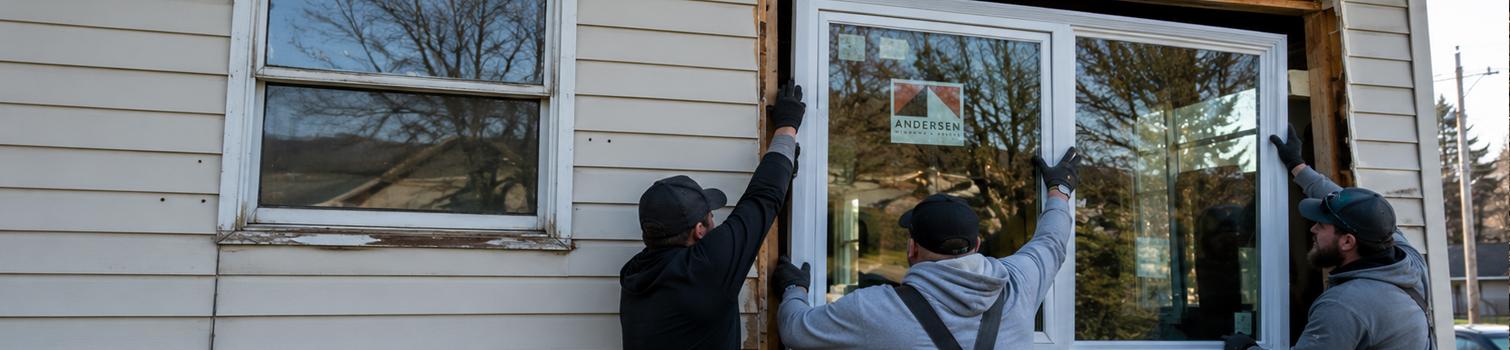
Pocket replacement and full-frame replacement for existing Utah homes. Full-frame replacement — complete removal of the existing frame, rough opening preparation, new window, and interior trim — is recommended for windows 15+ years old or any installation where the original flashing and air sealing quality is unknown. All replacements specified to the project’s IECC climate zone U-factor requirement. Every opening includes sill pan with end dams, ASTM E2112 flashing sequence, and backer rod air seal at the rough opening perimeter before trim is installed.

Complete new construction window installation scopes — product specification coordinated with the building envelope design, rough opening sizing per manufacturer requirements, sill pan flashing with end dams, flexible flashing tape at jambs integrated below the housewrap, head flashing with formed metal drip cap, interior casing, and blower door coordination for IECC R402.4 air sealing compliance. Rough opening air sealing is completed and verified before drywall on every new construction project — the window is never the last thing to be checked.

Recruitment Executive Search

Complete entry and exterior door installation — pre-hung door unit, jamb, threshold, weatherstripping, hardware, and rough opening air sealing. Fiberglass composite and insulated steel door systems for Utah thermal performance requirements. Multi-point locking hardware that maintains weatherstripping compression across the full door perimeter. Door replacement scopes include inspection of the rough framing for moisture damage before new unit installation — the most common finding on Utah replacement door projects, and the one most often skipped by contractors who charge less.

Sliding glass door and hinged French patio door installation — complete with flashing, sill pan with positive outward drainage, and rough opening air sealing. Sliding patio door systems in vinyl, aluminum, and fiberglass; multi-pane glazing to IECC requirements; and low-threshold configurations for accessibility compliance. All patio door sill pan installations include end dams and a sloped drainage plane to the exterior — the most frequently missed detail in patio door installation, and the leading cause of subfloor rot and structural damage in Utah homes.

Recruitment Executive Search

Complete egress window installation for Utah basement bedrooms and legal ADU conversions — foundation wall cutting, window well excavation with drainage connected to the perimeter drain tile, egress-size window installation (minimum 5.7 sq ft net clear opening, 24″ minimum height, 20″ minimum width per IRC R310), and interior finish. Required for every basement sleeping room and every bedroom in a legal basement ADU. RainFire Builders manages the complete permitted scope — from rough opening inspection through final certificate — with no handoffs to separate trades.

Commercial window systems and aluminum storefront installation for office buildings, retail spaces, and mixed-use properties across Utah’s commercial market — including Lehi’s Silicon Slopes corridor, South Jordan, and downtown Salt Lake. Thermally broken aluminum curtainwall and storefront systems meeting the IECC commercial energy code for Climate Zone 5. Multi-story installation, custom frame colors, integration with commercial air barrier systems, ADA-compliant thresholds, and automatic door operators for accessible commercial entries.

HOW WE WORK

The RainFire Window & Door Installation Process

Installation quality in windows and doors cannot be inspected after the trim goes on and the siding closes. Our process makes the critical flashing and air sealing steps visible, documented, and verified — before they are buried in the wall.

About Avada Recruitment
Designed for Utah’s Envelope

Window & Door Decisions that Matter in Utah’s Climate

Utah has one of the highest solar resource levels in North America — over 300 sunny days per year at the SLC valley floor, more at altitude. For south-facing windows, this is an asset: a somewhat higher SHGC (0.35–0.45) meaningfully reduces winter heating loads through passive solar gain. For west-facing windows, it’s a liability: a lower SHGC (0.25–0.30) controls afternoon summer heat gain and prevents the west rooms of a Utah home from becoming unusable on summer afternoons. Specifying SHGC by orientation is the distinction between a thoughtful Utah window specification and a one-size-fits-all commodity purchase.

Interior window condensation is the visible symptom that drives most Utah window replacement decisions — and a direct diagnostic of thermal performance. Condensation forms when the interior glass or frame surface temperature falls below the dew point of the interior air. In Utah’s cold winters with heated interior air at 35–50% relative humidity, any surface below approximately 45–50°F will condense. The NFRC Condensation Resistance Factor (CRF) predicts which products will develop condensation in Utah winter conditions. Fiberglass frames with warm-edge spacers achieve CRF 60–70+; standard vinyl with aluminum spacers score 35–50. Interior condensation tells you the window is cold and conducting heat at a higher rate than its U-factor label implies.

Build tight, ventilate right is the correct approach for new Utah construction. IECC 2021 requires ≤3.0 ACH50 in new residential construction — tested by blower door. Windows and doors are the primary failure points in new construction air tightness. RainFire Builders coordinates window and door air sealing with the mechanical ventilation system design to ensure the home is both tight to the outdoors and adequately ventilated from within — neither drafty in winter nor stuffy in summer.

IECC Zone 5 & 6 Requirements

Valley communities: Zone 5 — U-factor ≤ 0.30, SHGC ≤ 0.40. Mountain communities above ~5,500 ft: Zone 6 — U-factor ≤ 0.27. RainFire Builders verifies the correct zone for the specific project address before the product is ordered. Code compliance is a specification decision, not an installation variable.

300+ Sunny Days & High-Altitude UV

SLC at 4,200 feet receives ~25% more UV than sea-level locations at the same latitude. Titanium dioxide–stabilized vinyl frames and ASTM E2837-rated IGU edge seals are specified on every RainFire Builders Utah window installation to resist UV-driven chalking, brittleness, and edge seal degradation.

Class 4 Hail — Wasatch Front

The Wasatch Front experiences significant hail events most summers. Class 4 impact-rated windows (FM 4473 / UL 2600) withstand 2-inch simulated hailstone impact. Insurance carriers may offer premium discounts for Class 4 recognition. RainFire Builders advises on product availability and carrier benefits before you decide whether the upgrade makes sense for your project.

Blower Door Target: ≤3.0 ACH50

IECC 2021 requires new Utah residential construction to achieve ≤3.0 air changes per hour at 50 Pascals. Windows and doors are the primary failure points. Low-expansion foam at the interior rough opening perimeter and backer rod and sealant at the exterior, at every opening, is the required treatment to pass the test and deliver the energy performance the windows are rated to.

BUILDING ENVELOPE FUNDAMENTALS

More Than Glass and a Frame – The Most Tested Part Of The Wall

A window is not a product. It is a system — frame, sash, glazing unit, warm-edge spacer, weatherstripping, hardware, and the critical interface between the window and the surrounding wall assembly. Every element must perform correctly for the window to deliver its rated energy performance, and the interface between window and wall — the flashing, air sealing, and water-resistive barrier integration — is the element most likely to fail when installed by crews without building science training.

The performance gap between a properly specified and properly installed window and a code-minimum window with reversed flashing sequence is enormous. A high-performance fiberglass window installed with improper flashing will drive moisture into the wall cavity within 3–5 years, eventually requiring removal and reinstallation to repair structural framing damage. A standard code-minimum vinyl window installed with meticulous ASTM E2112 flashing discipline will outperform it in long-term durability.

In Utah’s specific climate — 300+ days of sun at 4,200+ foot elevation UV intensity, diurnal temperature swings exceeding 40°F in spring and fall, Class 4 hail events along the Wasatch Front most summers, and cold winters where interior window condensation reveals both thermal bridging and air sealing deficiencies — the specification decisions and installation quality together determine whether windows are an asset or a liability over the 20–30 year product life.

RainFire Builders installs windows and doors as a complete building envelope scope: product specification matched to IECC Climate Zone 5 or 6, ASTM E2112-compliant flashing at every opening, rough opening air sealing, and interior trim completed to no-gap precision. We install the window and everything that connects it to the house.


FRAME & SASH

Frame material (vinyl, fiberglass, wood-clad, aluminum) determines thermal performance, UV resistance, and expansion behavior across Utah’s full temperature range. Multi-chamber profiles resist distortion.

INSULATED GLAZING UNIT

Two or three sealed panes with inert gas fill (argon or krypton) and low-e coating. The IGU U-value dominates the whole-window U-factor. NFRC-certified values are the only reliable comparison data.

LOW-E COATING & GAS FILL

Microscopically thin metallic coating reflects infrared radiation. Coating position (surface 2, 3, or both) determines SHGC and U-factor. Argon or krypton gas fill reduces conduction between panes.

WARM-EDGE SPACER

Separates glass panes at the perimeter. Aluminum spacers create thermal bridging at the glass edge — warm-edge polymer or foam-metal composite spacers reduce edge condensation in Utah winters.

SILL PAN & FLASHING

Self-adhering flexible tape at sill pan (with end dams), jambs, and head — integrated with the WRB per ASTM E2112. The most installation-dependent element. Reversed flashing sequence silently destroys wall framing.

AIR SEAL & WEATHERSTRIPPING

Low-expansion spray foam or backer rod at the rough opening perimeter. Compression weatherstripping at the sash. Multi-point locking hardware maintains seal compression — improperly adjusted hardware is a major air infiltration source.

COMMON QUESTIONS

WINDOW & DOOR FAQs

Specific, honest answers to Utah homeowners’ most common questions about windows, performance ratings, and installation — written for actual Wasatch Front conditions.

What are the IECC energy code requirements for windows in Utah?2026-06-05T22:09:24+00:00

Utah’s residential energy code (IECC 2021 with local amendments) sets window performance requirements by climate zone. Wasatch Front valley communities — Sandy, Draper, Salt Lake City, Provo, Ogden, and surrounding cities below approximately 5,500 feet — fall in IECC Climate Zone 5: maximum U-factor 0.30 and maximum SHGC 0.40 for vertical fenestration in most residential applications. Mountain communities above approximately 5,500–6,000 feet — Park City, Heber City, Midway, Coalville — fall in Climate Zone 6: maximum U-factor 0.27. These requirements apply to new construction windows and to full window assembly replacements. U-factor measures heat loss rate — lower is better. SHGC measures solar heat gain — south-facing Utah windows can benefit from higher SHGC for passive solar. RainFire Builders confirms the applicable zone for each project address before specifying products.

What is the difference between U-factor and SHGC?2026-06-05T22:10:37+00:00

U-factor measures the rate of heat transfer through the complete window assembly — frame, spacer, and glass together. A lower U-factor means better thermal insulation. Reference points: single-pane window approximately 1.0; standard double-pane vinyl approximately 0.45–0.55; double-pane with low-e coating and argon fill approximately 0.28–0.35; triple-pane fiberglass with dual low-e and krypton approximately 0.14–0.22. IECC Zone 5 requires a maximum U-factor of 0.30. Solar Heat Gain Coefficient (SHGC) measures the fraction of incident solar radiation that passes through the window as heat gain — a value from 0 to 1, with lower meaning less solar heat admitted. For Utah orientation-specific design: south-facing windows with SHGC 0.35–0.45 deliver measurable passive solar heating benefit in Utah’s sunny winters; west-facing windows at SHGC 0.25–0.30 control afternoon summer overheating. Both values appear on the NFRC certification label — that label is the only reliable data source.

What window frame material is best for Utah’s climate?2026-06-05T22:11:24+00:00

Fiberglass is the top performer in Utah’s conditions. Its thermal expansion coefficient closely matches glass — nearly eliminating the stress at the IGU seal and weatherstripping that vinyl frames accumulate across Utah’s 100°F+ annual temperature range. Fiberglass resists UV degradation without chalking or color fading, achieves the highest condensation resistance factor values, and maintains dimensional stability across decades of thermal cycling. Multi-chamber vinyl (3+ chambers, reinforced corner welds, TiO₂ UV stabilization) performs acceptably for most applications and remains the most common choice by volume. Single-chamber vinyl develops corner joint separation in Utah’s thermal cycling within 10–15 years — allowing air infiltration and progressive seal degradation. Aluminum frames without a thermal break produce significant interior condensation in Utah winters and are not recommended for residential use. The performance and durability premium for fiberglass over multi-chamber vinyl is real and meaningful in Utah’s specific environment.

How much do replacement windows cost in Utah?2026-06-05T22:12:23+00:00

Pocket replacement (new window sash and glazing into existing frame), standard double-hung or casement, vinyl, double-pane low-e/argon: $400–$800 per window including installation. Full-frame replacement (complete removal, rough opening prep and any framing repair, new window, interior trim) in multi-chamber vinyl: $600–$1,400 per window; fiberglass: $900–$2,000. Specialty shapes, large pictures or picture/casement combinations, or custom sizes: $1,200–$3,500+. Whole-house full-frame replacement on a 2,000 sq ft home with 14–18 windows: $8,000–$22,000 in vinyl, $12,000–$32,000 in fiberglass. Budget-driven window projects often become more expensive than expected when framing moisture damage is discovered on the opening — a risk that increases with every year a poorly flashed window remains in the wall.

What is an egress window and when is one required in Utah?2026-06-05T22:13:12+00:00

An egress window is a bedroom or sleeping room window meeting IRC Section R310 minimum opening requirements for emergency escape: minimum 5.7 square feet net clear opening (5.0 sq ft at grade level), 24-inch minimum clear opening height, 20-inch minimum clear opening width, and 44-inch maximum finished floor to sill height. Most standard basement horizontal slider windows are too small to qualify. Egress windows are required for every basement bedroom, any room used as a sleeping area in the basement, and every sleeping room in a legal basement ADU. Installation in an existing Utah basement requires: foundation wall cutting, window well excavation with drainage connected to the foundation’s perimeter drain, egress-size window installation (typically casement or single-hung, 36–44 inches wide), window well cover, and interior finish around the opening — all permitted and inspected. RainFire Builders manages the complete scope, including the foundation cut, which most window contractors don’t perform.

What is a Class 4 impact-resistant window and should I consider one for my Utah home?2026-06-05T22:14:16+00:00

Class 4 is the highest impact rating under FM 4473 and UL 2600 hail impact test standards — requiring the window to withstand impact from a 2-inch diameter steel ball dropped from 20 feet without the glazing cracking or breaching. The Wasatch Front is in one of the most active large-hail corridors in the western United States. While Utah building codes don’t require Class 4 windows (though some jurisdictions require Class 4 roofing), homeowners in foothill communities who have experienced hail events that cracked storm glazing or heavily pitted vinyl frames benefit from the protection. The more immediate consideration for many homeowners: insurance carriers that recognize Class 4 impact-resistant windows may offer premium discounts similar to those available for Class 4 roofing — potentially partially or fully offsetting the incremental product cost over the life of the discount. RainFire Builders can advise on Class 4 product availability in your preferred frame material and help you determine whether your carrier offers recognition before committing to the upgrade.

What is proper window flashing and why does it matter in Utah?2026-06-05T22:15:04+00:00

Window flashing is a system of materials — sill pan, flexible flashing tape, and integration with the wall’s water-resistive barrier — that directs any water infiltrating around the window frame to drain to the exterior of the wall rather than into the wall cavity and framing. The ASTM E2112 installation standard defines the correct sequence: (1) sill pan flashing with end dams, sloped outward; (2) water-resistive barrier (housewrap) lapped over the top of the sill pan; (3) flexible flashing tape up the jambs, lapped under the housewrap at the wall sides; (4) flexible tape and formed metal drip cap at the head, with housewrap lapped over the top. The critical failure mode: flexible tape applied over the housewrap at the jambs rather than under it — a sequence that creates a water dam directing moisture into the wall cavity rather than out. A misflashed window may perform acceptably for 3–7 years while the housewrap compensates, then suddenly reveal soft framing, degraded insulation, and interior moisture damage that requires opening the wall to repair. RainFire Builders trains every installation crew on ASTM E2112 sequence and supervisors verify the flashing at every opening before any siding is applied.

How do vinyl windows perform in Utah’s large temperature swings?2026-06-05T22:16:21+00:00

Vinyl (PVC) has a coefficient of thermal expansion approximately 5–6 times higher than glass and approximately 3 times higher than fiberglass. Across Utah’s full annual temperature range — exterior surface temperatures from -10°F in cold winter weather to 130°F under direct summer sun — a typical vinyl window frame expands and contracts by a measurable fraction of an inch per seasonal cycle. In a multi-chamber extruded vinyl profile with reinforced corner welds, this movement is absorbed without performance degradation. In single-chamber or low-quality vinyl profiles, the cumulative stress of Utah’s temperature cycling produces corner joint separation within 10–15 years — visible as air infiltration at window corners and progressive weatherstripping failure as the frame distorts. Specifying multi-chamber vinyl (minimum 3 chambers) with TiO₂ UV stabilization is the key requirement for acceptable long-term Utah vinyl window performance. Fiberglass, with a thermal expansion rate nearly identical to glass, is effectively stress-free across Utah’s full temperature range — the reason fiberglass windows consistently outperform vinyl over 25–30 year product lifespans in Utah’s conditions.

The RainFire Difference

WHY CHOOSE RAINFIRE BUILDERS FOR WINDOWS & DOORS?

IECC Zone 5 & 6 Expertise

We confirm U-factor and SHGC compliance for the specific project zone before any product is ordered — not after it arrives on a truck. Zone compliance is a specification decision, and we make it correctly the first time.

ASTM E2112 Flashing — Every Opening

The flashing sequence is what separates windows that last 30 years from ones that destroy wall framing in 7. Every opening follows ASTM E2112, and supervisors verify the sequence before siding is applied — not at a callback years later.

Air Sealing That Passes Blower Door

Window and door openings are the primary air infiltration failure points in Utah’s new construction. Our rough opening sealing at every opening is coordinated with the blower door test protocol and documented before drywall — not hoped for at the test.

Complete Scope — Glass to Casing

RainFire Builders installs the window, the flashing, the air seal, and the interior casing — including framing repairs when moisture damage is found. One team, one contract, one warranty. No handoffs between trades that let quality gaps hide in the seams.

CLICK HERE to see the rest of the EXTERIOR SERVICES

CONTINUE BUILDING:

RELATED INTERIOR SERVICES

Roofing

Skylight installation integrates window and roofing scopes – curb flashing counter – flashing and waterproofing managed as a single scope to eliminate the most common skylight leak failure mode in Utah’s freeze-thaw cycle  |  Explore More About Roofing

Siding & Cladding

The siding and window flashing systems must integrate correctly – housewrap, flashing tape, and cladding are a single water management system. Managed as a coordinated scope on every RainFire Builders exterior project  |  Explore Windows & Doors

Foundation & Egress

Basement egress window installation requires foundation wall cutting – a scope that connects our window installation and foundation services. We manage the complete scope without sub-trade handoffs  |  Explore Insulation

Interior Trim & Millwork

Window casing, stool, apron, and door surround trim – completed to no-gap precision in our interior millwork scope. The visible quality indicator of every window and door installation |  Explore Trim & Millwork

Insulation

Rough opening insulation and air sealing at window and door perimeters is the insulation scope item most directly affecting blower door results and installed window performance in Utah homes |  Explore About Insulation

All Exterior Services

Return to the full exterior services overview – roofing, siding, foundation, windows, decks, and concrete – all managed under one licensed general contractor.  |  Go Back to the Beginning


Specified for Utah. Installed to ASTH E2112. Sealed to Pass Blower Door.

Stop Paying to Heat the Outdoors. Let’s Fix Your Windows & Doors.

The most common source of air infiltration and heat loss in Utah homes isn’t inadequate insulation — it’s window and door rough openings never properly air-sealed, flashing tape installed in the wrong sequence directing moisture into the wall framing, or products specified at U-factors that don’t meet IECC requirements for the specific climate zone. RainFire Builders provides free on-site window and door assessments across the Wasatch Front — we evaluate your current windows and doors, identify flashing or air sealing deficiencies, and specify the right products for your climate zone, budget, and project goals. No pressure, no product agenda. Just an honest evaluation from a contractor who has been installing windows the right way in Utah’s climate for over a decade.

Call us now at (385) 336-7246 or request an estimate online. We’ll start on your property’s project and your future with care.

We Make It Happen – 

Request a Quote

Schedule your in-person consultation. Let’s get your project started

Go to Top