
Project Management – Estimates
The Number You Can
Actually Trust
Every construction project begins with a number. The question is whether that number is a commitment or a starting point for disappointment. A RainFire Builders estimate is a written document with line-item costs, a defined scope of work, stated exclusions, market-realistic allowances, and an explicit contingency — the document that tells you exactly what you’re buying before you sign anything.
OUR ESTIMATES SERVICES
WHAT AN ESTIMATE ACTUALLY IS
Not a Guess. Not a Range –
A Written Commitment
In residential construction, the word “estimate” is used to describe everything from a contractor’s mental calculation shared over the phone to a 40-page document with line-item costs, specification sheets, and a signed scope of work. These are not the same thing, and they do not produce the same results.
A verbal quote protects the contractor. There is nothing in writing, so the number can grow as the project reveals scope the contractor “didn’t know about” — even when that scope was entirely foreseeable. The client has no basis for dispute because they agreed to nothing specific. This is the most common source of the “my contractor doubled the price” complaint that defines the residential construction industry’s reputation.
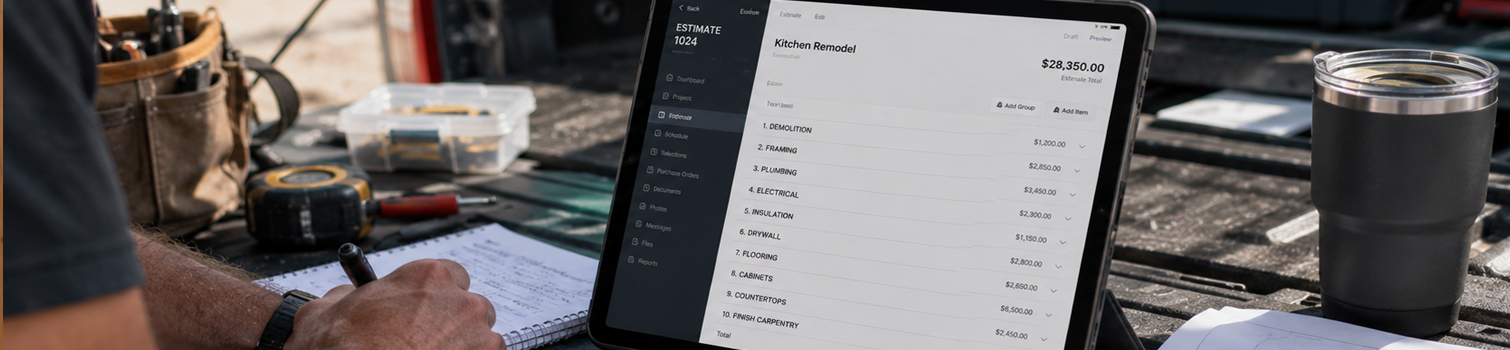
A written, line-item estimate with a defined scope of work protects the client. It states what is being built, what it will cost, what is included, and what is specifically excluded. When a contractor submits a written estimate, they are committing to that scope at that price. Changes require a written change order that the client approves before work proceeds. The estimate is the document that makes construction a managed process rather than an open-ended financial exposure.
RainFire Builders provides written estimates on every project without exception — organized by CSI MasterFormat cost divisions (where applicable), broken into labor and materials for each trade, with allowances explicitly identified and set at market-realistic levels for Utah’s 2025–2026 construction market. We do not provide verbal quotes or range estimates, and we do not begin work on a project until the estimate has been reviewed, any questions answered, and a contract executed by both parties.

OUR ESTIMATING SERVICES
Every aspect of RainFire Builders’ estimating process — from the initial site visit through the estimate-to-contract conversion — is managed with line-item discipline and complete scope documentation on every project.
HOW WE ESTIMATE
The RainFire Builders Estimating Process
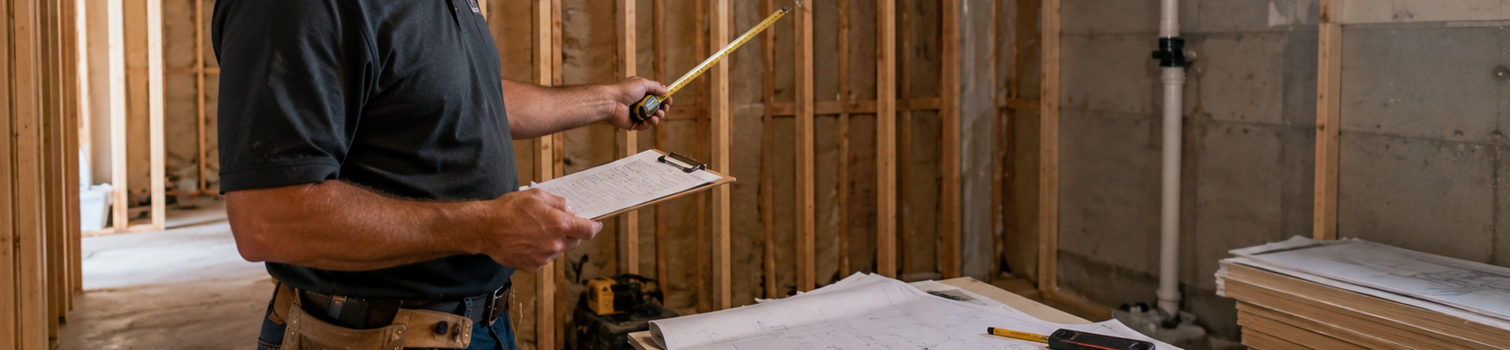
A good estimate is produced through a defined process — not a gut feel. Here is how RainFire Builders moves from a client conversation to a written estimate that both parties can trust.

Why Utah Construction Estimates Need Local Expertise
The most dangerous number in Utah construction is a cost-per-square-foot estimate from a national average. “Custom homes in Utah cost $250–$350 per square foot” is a statement that is simultaneously cited in marketing materials, published in industry reports, and systematically wrong for most actual projects. That range may describe a finished project cost per square foot for a typical construction scenario — but it assumes average soil conditions, average site topography, average permit complexity, average material selections, and average labor market conditions. Most Wasatch Front projects deviate from the average on multiple variables simultaneously.
Site conditions on the Wasatch Front are highly variable and highly consequential. The cost difference between a project on a flat lot with good soil and one on a hillside with rock within 3 feet of grade and expansive clay below can be $80,000–$150,000 on a mid-size custom home — and none of that shows up in a cost-per-square-foot estimate. It shows up as change orders after the project starts, when the excavator hits rock, and no one had budgeted for it because the estimate was prepared without a site visit.
The Utah construction permit market has layers that affect project cost: WUI fire zone reviews in Sandy, Draper, and Cottonwood Heights foothills; slope stability review requirements in hillside jurisdictions; ADU compliance review under HB 82’s evolving municipal implementation; and engineering review requirements that vary meaningfully between the 15+ municipalities RainFire Builders serves. We know which jurisdictions require soil reports as a permit condition, which ones accept engineer-stamped drawings without review delay, and which ones have plan check processes that add 6–8 weeks to the pre-construction timeline. These factors affect project cost and schedule, and they are reflected in every estimate we prepare.
